[Built on China] BYD Builds Factories in Southeast Asia When the Bottom-Line Math Adds Up
Editor's note:
China's manufacturing base is both a source of competition and infrastructure that businesses elsewhere can build on. Its factories, machinery and supplier networks can help firms make new products, develop skills and win customers. In "Built on China: The Upside, the Dependency, the Deals," a series designed for APEC, we ask what businesses across the Asia-Pacific gain from that access, what they come to depend on and which deals give them room to grow on their own terms.
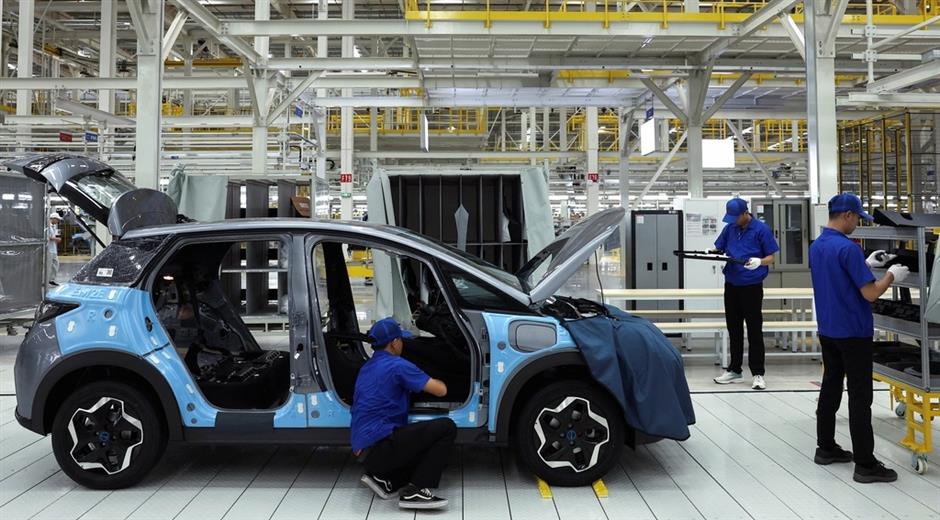
In 2024, when Chinese automaker BYD rolled an inaugural Dolphin electric hatchback off the assembly line at its factory in Thailand, its first plant in Southeast Asia, the message to the region was unambiguous that the Chinese giant was there to build and Thailand was just a beachhead.
Fast forward to this year and the message has blurred somewhat. In Malaysia, BYD has quietly shelved its plans to build a US$316 million factory, pivoting instead to contract assembly with local partner Inokom.
This is not a story of BYD losing its appetite for Southeast Asia but rather a lesson on how local rules dictate the footprint of Chinese investment. The contrast between BYD's deep commitment in Thailand and its light-asset approach in Malaysia reveals a truth for policymakers: Investment is measured not by promises but by the math of compliance.
Thailand's approach has been to tie aggressive local production mandates directly to market access. The government's electric vehicle incentives dictate that automakers must manufacture two vehicles with local parts this year for every vehicle they import. By next year, the ratio rises to 3-1, and failure to comply can result in tax-break clawbacks.
The rule may seem suffocating, but at least it is clear. That allows BYD to map out capital expenditure and supplier development with relative certainty.
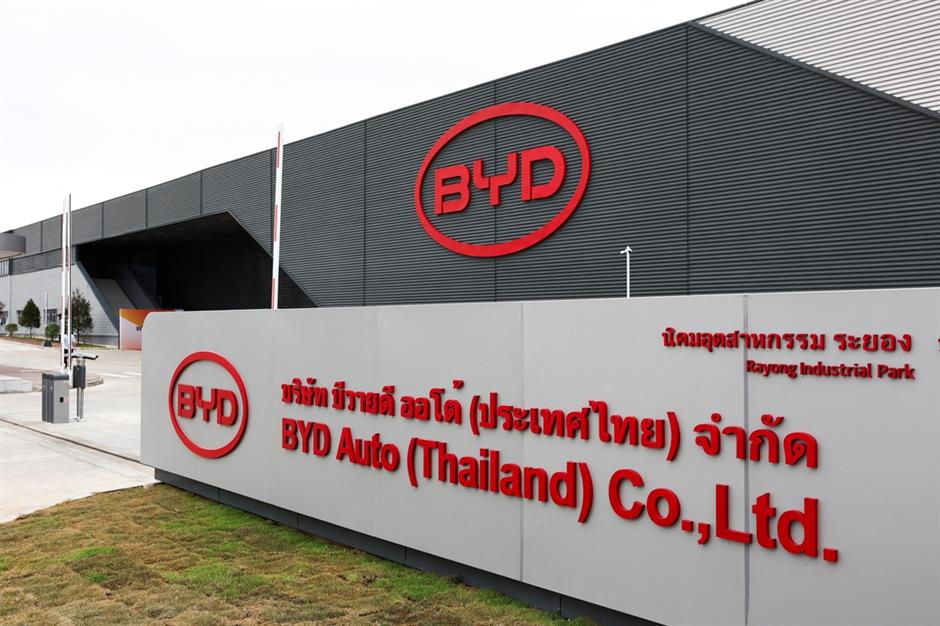
As of September 2026, BYD's Rayong plant in Thailand had produced a cumulative 100,000 vehicles, and the company pushed local procurement rates past 50 percent across five models.
The math in Malaysia, however, didn't add up.
Malaysia wanted the same depth as Thailand, but its regulatory design had the opposite effect. BYD's original plan was to build a massive vehicle plant in Perak, costing about US$320 million, to assemble imported knocked-down kit parts. However, the government's policy framework was a stacked deck of overlapping conditions. To qualify for incentives, automakers faced a dual mandate. Up to 80 percent of the assembled vehicles had to be exported, and the local content requirement had to hit 40 percent.
Then there was a price floor. Malaysia stipulated that the 20 percent of production sold locally must carry a minimum sticker price of 200,000 ringgit (US$49,500). For BYD, that was a fatal blow. Its core volume drivers in the region, the Dolphin and Atto 3, are engineered to compete in the 70,000-120,000 ringgit bracket.
The economics simply didn't work. A new factory requires massive fixed costs. If BYD couldn't sell its volume models domestically due to the price floor and had to export 80 percent of its output from a nascent supply chain, the return on investment vanished.
So, BYD did what any rational manufacturer would do. It scrapped the plant in September, instead tapping partner Sime Darby's Inokom's manufacturing facilities and established supply chain. BYD keeps its knock-down kits under the customs threshold, bypasses the capital outlay of a new plant and pays a tolling fee for the assembly line. Malaysia got its local assembly, but missed out on the supply chain ecosystem that could have come with it.
Some would argue that poorer countries in Southeast Asia need to set high barriers to prevent Chinese automakers from merely using them as screwdriver bases. Merely assembling shipped-in kits with cheap labor, without transferring technological know-how, doesn't create an industrial base for the future.
In 2025, BYD opened a vehicle assembly plant in Cambodia with first-phase investment of US$32 million and no legal requirements on local content. No problem with the math there.
That was followed two months ago with the opening of an US$875 million factory in Indonesia, with annual capacity of 150,00 vehicles and plans for battery production. The investment is notable because Jakarta's local content requirements are among the strictest in the region. So why there? Because Indonesia's ladder is steep but visible. The rules are phased and transparent, allowing a long enough timeframe for the math to be advantageous.
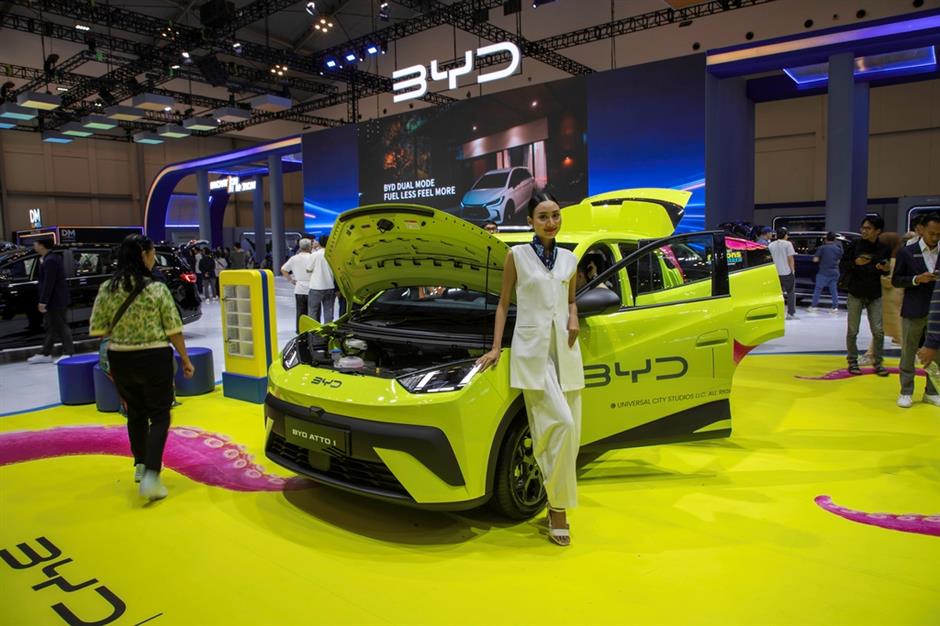
BYD is one of six companies that utilized a government program, available from February 2024 to December 2025, that fully exempted imported electric cars from import duty and luxury goods sales tax. The company shipped in 92,000 cars under its 100,000-unit quota and will offset that volume through local production by the end of next year. Effectively, the company will stop importing vehicles.
For Malaysia, the problem wasn't the height of the barrier but its unpredictability in the compliance maze. When an export quota interacts with a domestic price floor and a local content mandate, the rules stop acting as a filter for quality and start acting as a deterrent to capital.
Auto industry dialogue within the Asia-Pacific Economic Cooperation (APEC) bloc of 21 countries has been discussing supply chain resilience. But resilience cannot be built on shifting sands. If member countries want to capture the long-term value of Chinese manufacturing capabilities, the conversation must evolve.
APEC should be looking at a proposal making a compliance impact assessment part of any adjustment in auto localization rules. The assessment would show how overlapping rules affect specific vehicle segments.
The goal is not to lower barriers. Rather, it is to make the path forward unambiguous
The concept of "built on China" will remain a powerful engine for regional growth, but only if host economies understand that Chinese capital isn't blind. The automakers do the math, and it's up to national policymakers to show that it all adds up in incentive on the bottom line.
(The author is with the Information Research Institute at the Shanghai Academy of Social Sciences.)
Editor: Liu Qi
In Case You Missed It...
 Nov 19, 2026