Perhaps Businesses SHOULDN'T Wait To Enter China
I have been reading China's economy the lazy way. You probably have too.
The lazy way is one number: GDP growth, the speed at which the whole economy gets bigger each year. For as long as I have been reading about this country, that number has been the story. When it sat above 10, the story was a miracle. Now that it is about half of that, the story in much of the foreign press is a slowdown, and the advice that follows is always the same. Wait. Hold your money. See what happens.
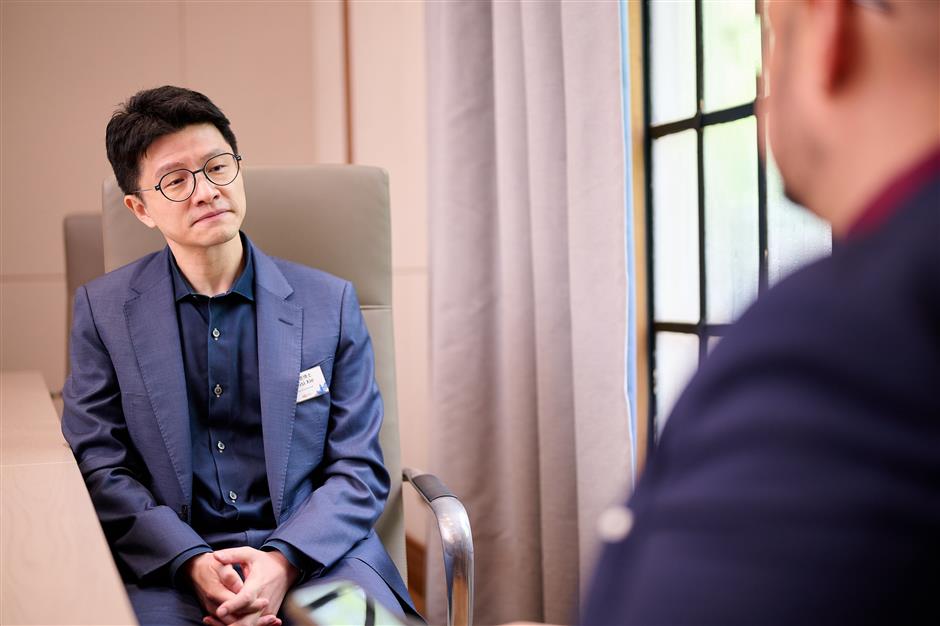
Dr Xie Weisi thinks that advice is wrong, and he has the slides to show why.
Xie is the Shanghai director of the Economist Corporate Network, the arm of The Economist Group that briefs senior executives at international companies on the markets they work in. Before that, he taught economics at Shanghai Jiao Tong University and spent time at the World Trade Organization in Geneva. From working within the halls of top-tier Chinese academia to globally consequential institutional environments, his pedigree (and credibility) is substantial.
His job, in plain terms, is to tell the people who run foreign companies in China what is really going on.
He is not a salesman for China. In the same presentation where he makes the case below, he says plainly that households are still careful with their money, and that the recent rise in average prices (the first in 12 quarters) owes more to energy than most might realize.
"While on the aggregate level macroeconomic growth rates (the growth of the economy counted as one big total) are not as high as in recent memory," he tells me, "there are still structural areas worth exploring, as it pertains to new opportunities, China's growing middle class and silver economies, as well as new productive forces."
An economy shaped like a K – and "new productive forces"
"It is difficult to summarize the Chinese economy in a single slide or a handful of figures," Xie says. Then he does it with a single letter.
Draw a K. One line comes in from the left, then splits in two. One arm climbs. One arm drops. That, he says, is China today.
The climbing arm is what China calls "new productive forces ": artificial intelligence, computer chips, green energy, advanced manufacturing. Factory output and exports in these fields, electronics and chips above all, grew strongly in the first half of this year. Xie calls them the main pillars driving China's growth.
The other arm is the old engine room: property, construction, the great building boom that carried the last twenty years. It is running slower, and plenty of publications will tell you all about it.
Here is the part that gets missed. Add the two arms together, and you get a modest number. But nobody does business in an average. You do business in one industry, in one city, with one kind of customer. Xie's point is that a great many of those sit on the arm that is climbing.
"While we are not going to see across-the-board new opportunities for every company in every industry from every country, structurally speaking (looking at the parts of the economy, not the total), we still see emerging fields and market segments (slices of a market, such as one type of product or customer) that will receive more government attention and register higher growth potential in the next few years," he says. "For instance, industries and sectors that are aligned well with China's 15th Five-Year Plan (the national development plan for 2026 to 2030), the so-called 'new productive forces' and industries of strategic importance."
The plan was approved in March. It is public. It is, in effect, a published list of where the country intends to put its energy for five years. Few markets tell you that much in advance.
Four kinds of customers
Then there are the shoppers. Hearing Xie speak, I count four kinds worth watching.
The first is older. China has more than 320 million people over the age of 60, close to one in four, and Xie's projections have that share climbing past 30% in the years ahead. Abroad, this is usually written up as a problem. Xie files it under opportunity, and he notes that government policy is set to support this market for the next five to ten years.

"Sectors and commodities associated with consumer household wellness, healthcare, and medical care that align with China's overarching development goals, such as the silver economy (goods and services made for older people), present significant opportunities for multinationals," he says.
The second is the new middle class. About 68 percent of people in China live in cities, which Xie notes leaves plenty of room to catch up with Japan or the United States. Millions more are still to make the move, find better-paid work, and start spending. By 2029 or 2030, his team projects, more than 60% of Chinese households will be middle class, creating a global economic demographic with substantial purchasing power.
The third sits on a K of its own. Some shoppers now hunt for value. Others keep paying for premium goods, and that end of the market is still growing at a healthy pace, on one condition: the product has to deliver real quality and reliability. That, Xie notes, is where foreign brands have traditionally held the edge.
The fourth is everyone who came out of the pandemic wanting to feel better. Xie calls it the "me economy": money spent on wellness, on experiences, on looking after yourself, on things that make you feel something.
The younger China
People talk about China as one market. Xie keeps pulling the map apart. Economists have a word for what he finds: subnational markets, which simply means markets below the national level: a province, a region, a cluster of cities. In parts of the southeast, the eastern coast and the southwest, he points to city clusters with younger populations and higher birth rates than the national average. Younger cities mean new households, and new households buy things. This is important for foreign brands to pay attention to, particularly for their long-term planning. A brand that successfully establishes brand loyalty in one of these younger, higher-birthrate cities that have economic expansion is a strategic area to consider (if they can execute well).
For a foreign company sitting in Shanghai, these places can feel far away. I ask Xie for a roadmap.
"Subnational emerging markets, remote markets for them, might be strange in the sense that they don't have local connections and have very limited knowledge of the local market ecosystem (the local web of suppliers, sellers, platforms and customers)," he says. "So I think the best way for them to tap into those emerging subnational markets is to explore collaboration opportunities, especially with Chinese counterparts or peers who have established supply chains (the network that makes and moves a product), distribution channels, and marketing channels (the routes used to reach customers) in those areas."
In plainer words: do not go alone. Find the Chinese company that already has the trucks, the shelf space, and the phone numbers, and go in together.
Bring the laboratory
This is the part of the conversation I did not expect. Xie's advice is not only to come, but to come differently.
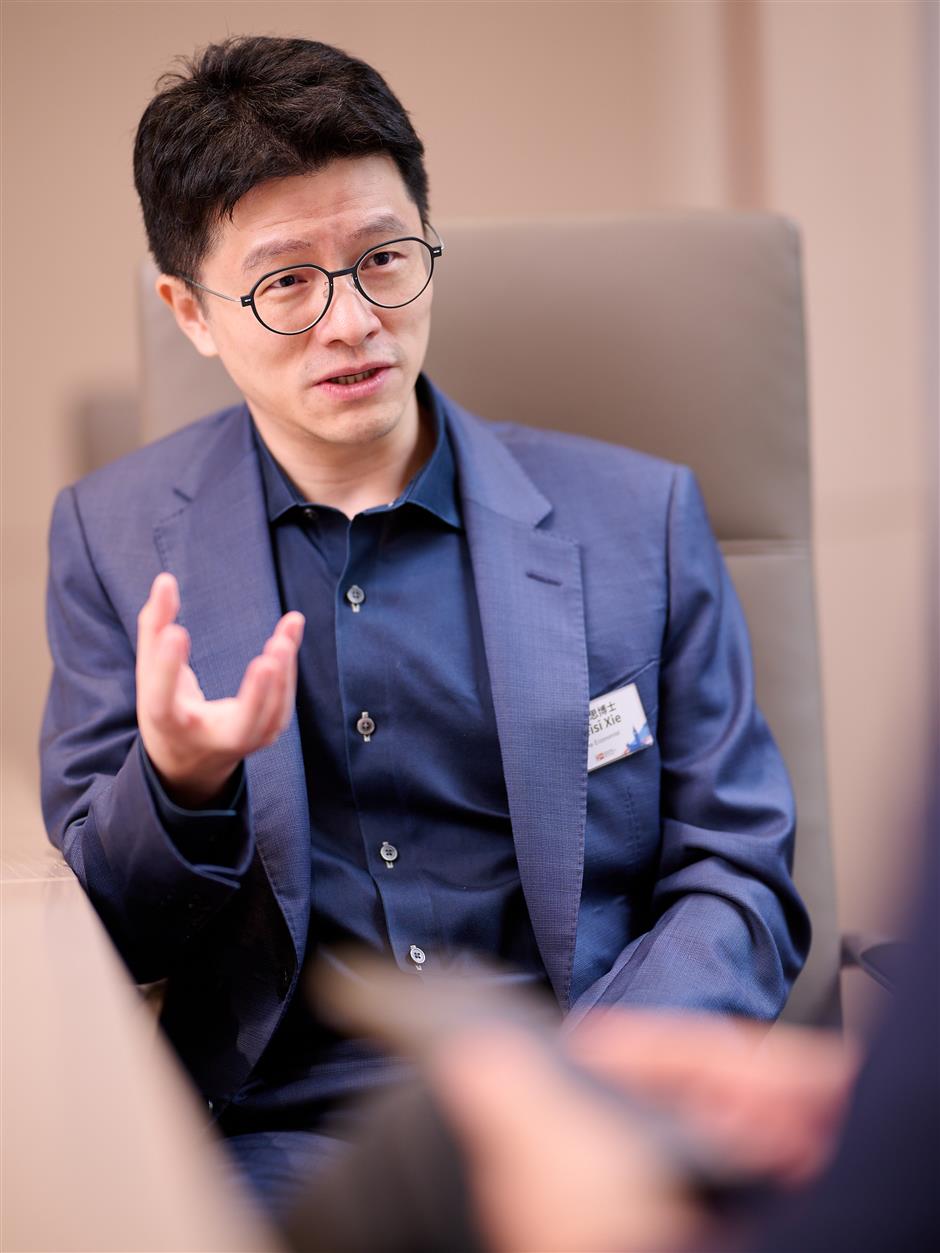
"These emerging markets typically require a higher level of commitment from global MNC (multinational corporation, a company that works in many countries) leadership," he says. "To stay competitive in these segments, companies should reconsider their China strategy, treating China as an R&D (research and development, the work of inventing and improving products) center and innovation hub rather than simply a final consumer market or a link in their global supply chain."
Read that again, slowly. For thirty years, foreign companies came to China for two reasons.
- One: to make things here.
- Two: to sell things here.
Xie is describing a third: to invent things here, and then take them to the world. The companies that use China as "a springboard and experimental field for global strategy and innovation," he says, "tend to be much more successful."
On timing, he does not hedge. "We absolutely do believe earlier entry is better than later entry. Building a brand successfully in China can create exponential compound growth (growth that builds on itself, like interest earned on interest) over time."
Green, and the great fixing up
Green technology is where Xie is most direct about how hard the work will be. China's leadership, he says, remains "very committed to the country's green agenda, both in the medium and long term." But so are China's companies.
"Multinationals usually face very fierce, high-level competition with their Chinese competitors," he says, "as some of them are now actually at the tech frontier (the leading edge of what technology can do) in related fields. They are not just competing with multinationals in the Chinese market, but also in overseas markets."
So where is the opening? In buildings that already exist. China has done most of its building. The next job is fixing up what it built, and making it cleaner. The State Council's urban renewal plan for 2026 to 2030 calls for renovating 115,000 old residential communities and building or upgrading around 770,000 kilometers of underground pipes.
"We do see that the government has announced very ambitious projects associated with revitalizing existing buildings, urban renovation, and upgrading commercial and residential buildings using higher environmental standards and green tech," Xie says. "These are areas where multinationals normally have a comparative and competitive advantage (things they do better, or more efficiently, than their rivals), and they can tap into them for future growth opportunities."
Heating systems. Water pipes. Insulation. Elevators for old apartment blocks. Unglamorous, enormous.
The anchor
Then there is the event of this year. In late February, the Strait of Hormuz, the narrow channel that carries about a quarter of the world's seaborne oil, closed, and stayed that way for months. About 80 percent of that oil is bound for Asia. The Philippines declared a national energy emergency, and Thailand, Malaysia, Vietnam and Indonesia brought in emergency measures to save energy.
China felt it too. But it had cushions: large oil stockpiles, pipelines that come overland and avoid the strait, a power grid backed by coal and renewable energy produced at home, and a fleet of electric cars that had already cut its oil demand by about a million barrels a day. For anyone running a factory, that matters more than any forecast.
"China's energy stability and resilience against external energy shocks (sudden jumps in fuel prices, or supply cuts, caused by events abroad) have added another crucial comparative advantage to its position in the global supply chain," Xie says. "Rather than being weakened, China's position in global supply chains has strengthened."
He goes further. The talk abroad for several years has been of companies pulling out. From his seat, briefing the people who actually make those decisions, Xie sees something else.

"Instead of decoupling (cutting business ties with China), multinationals are diversifying (adding factories and suppliers in other countries as well), yet China remains the anchor of their regional supply chain strategies," he says. "Alternative emerging markets, rather than serving as direct replacements for China, are being organically integrated into a China-centric supply chain (one with China at its center)."
The new factory next door is not replacing the one in China. It is plugged into it. Meanwhile, Xie adds, the work done inside China keeps "moving up the value chain" (making more advanced, more valuable products).
So here is the advice, in one breath: look at the arm of the K that is climbing, pick a partner who knows the ground, bring the laboratory along with the sales team, and come early.
Wait and see whether it is a strategy too. But by Xie's math, it is the expensive one.
Editor: Yao Minji
In Case You Missed It...

 Oct 22, 2026