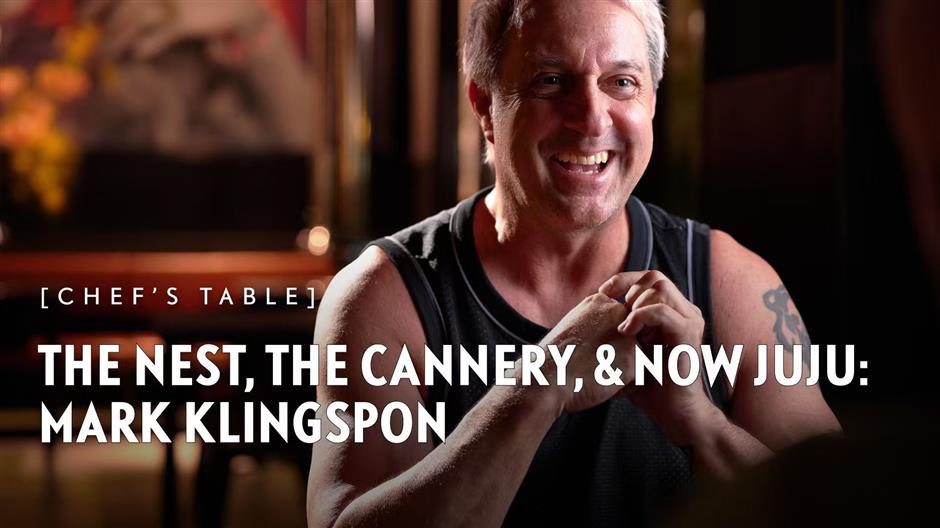
[Chefs Table] The Nest, The Cannery & Now Juju: Mark Klingspon
There is a particular kind of Shanghai sadness reserved for the day a restaurant you took for granted puts up the paper on its windows. You didn't go enough. You meant to. And now there is a new sign, and you are standing on Yuyuan Rd doing the math on how many Sunday lunches you skipped.
I did that math in August, when The Cannery closed after 10 years. What I did not expect was to be sitting in the same space six weeks later, at a table with a charcoal pit in the middle of it, eating Uruguayan short rib off the bone while the man who closed it explained why he'd cried about closing The Cannery in front of his staff.
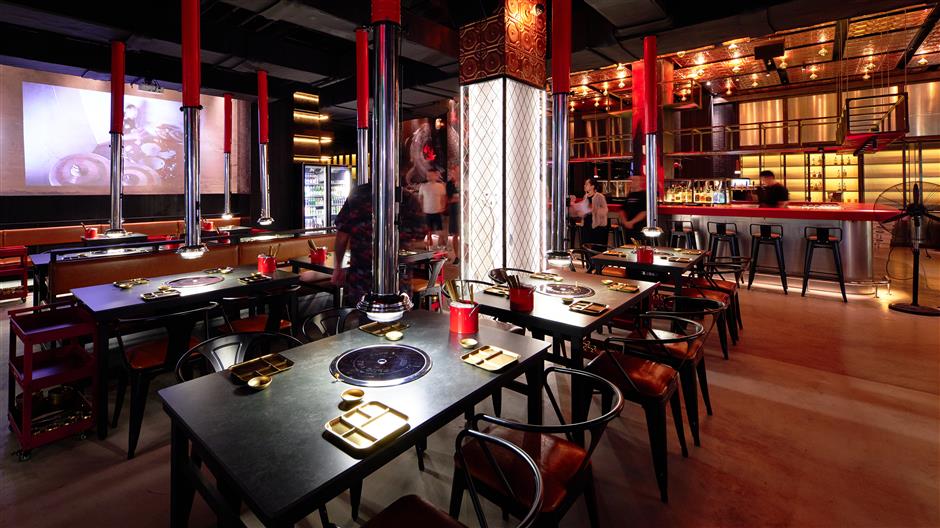
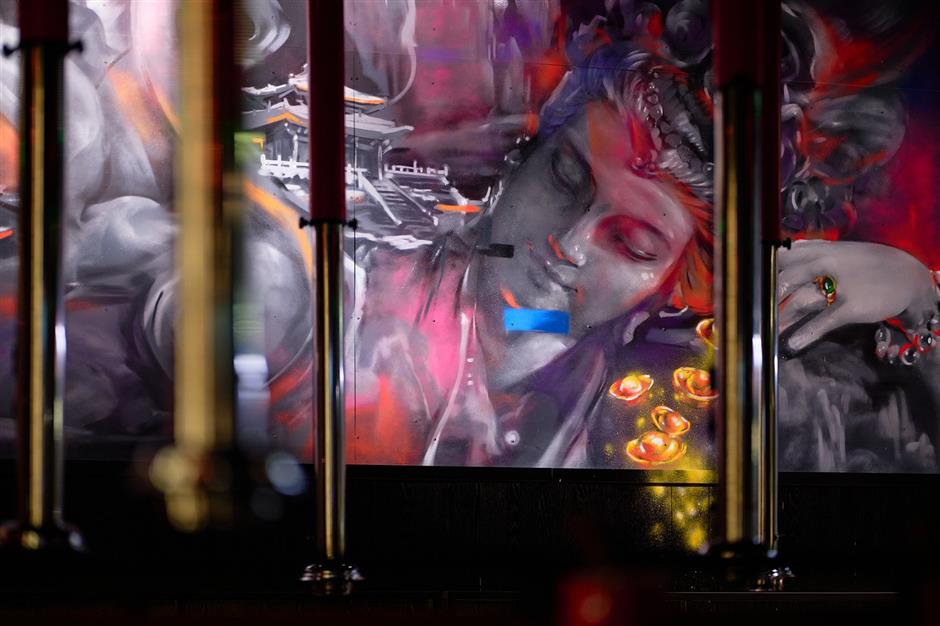
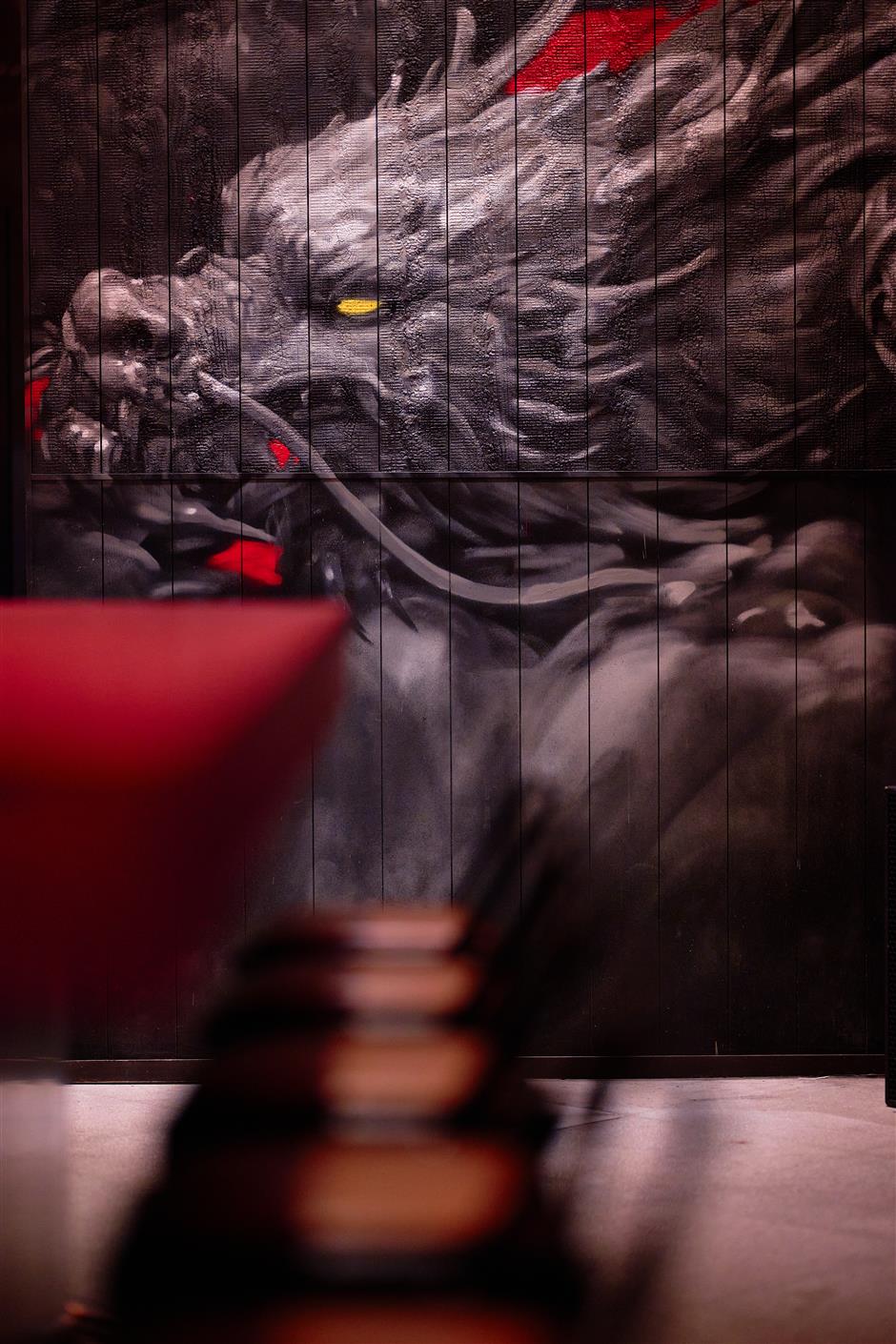
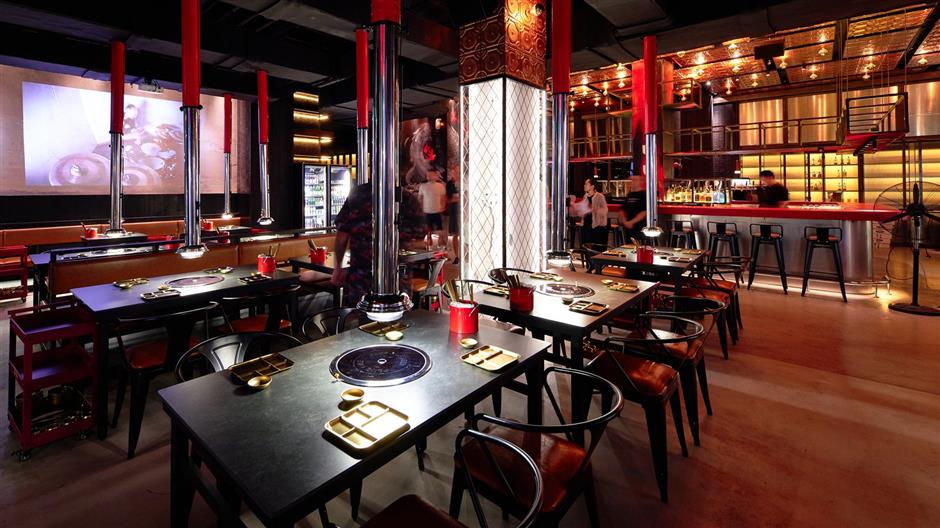
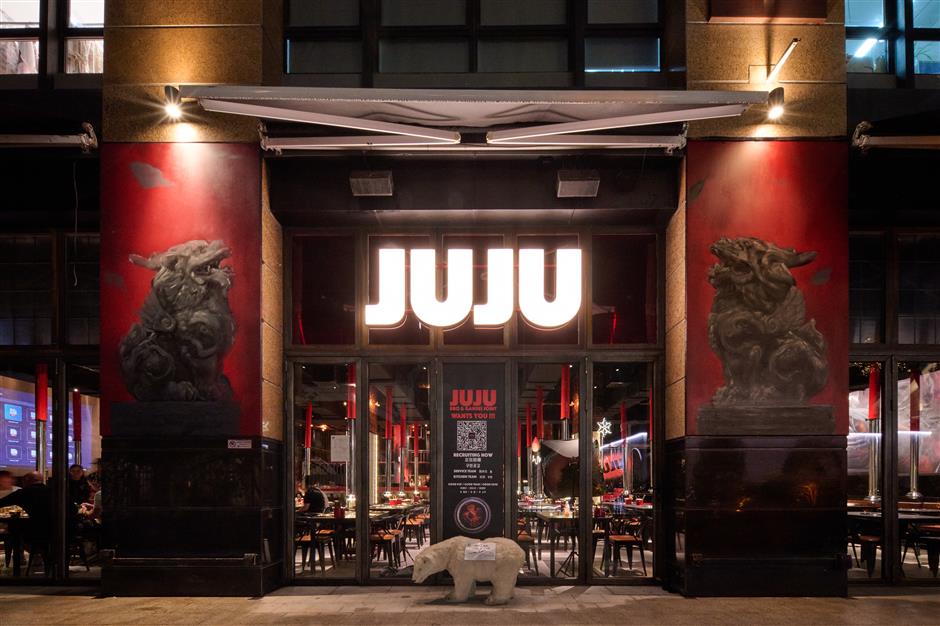
The new digs is called Juju now, and some Shanghai veterans might remember this as that really cool Korean barbecue institution on the Bund. The ceiling is gone from half of the space, the walls are covered in murals by a street artist called WOOJS, the bar is red and now has a DJ booth, and there are stone lions at the door, which is a lot of change for a place that used to smell like poutine and oysters. Mark Klingspon, 57, from Canada, a chartered accountant by training, wants to know if he can make a room full of Shanghainese in their 20s feel something alongside the large swath of expats who will order soju bombs.
We first sat down with Mark a year ago, at The Cannery, when it was still The Cannery. That conversation is where this one has to start.
Tell Us Your Origin Story
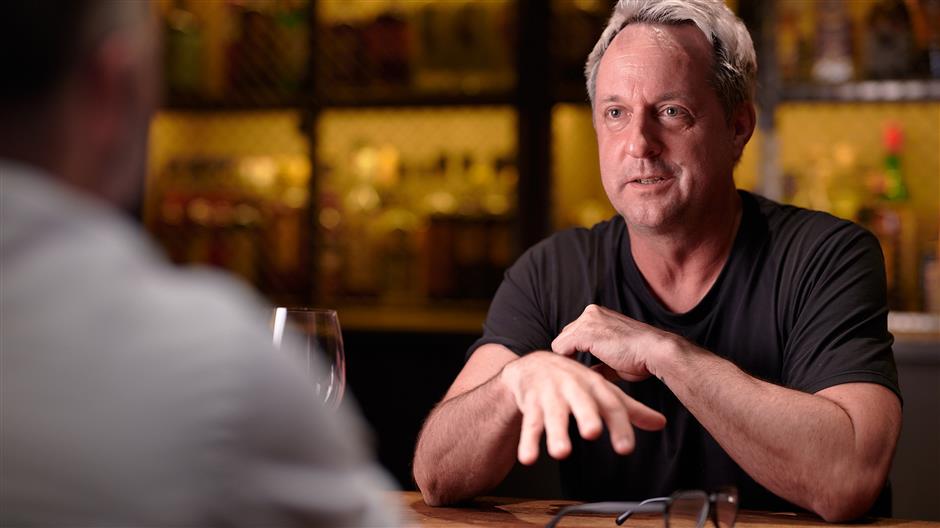
CNS: Tell us your origin story.
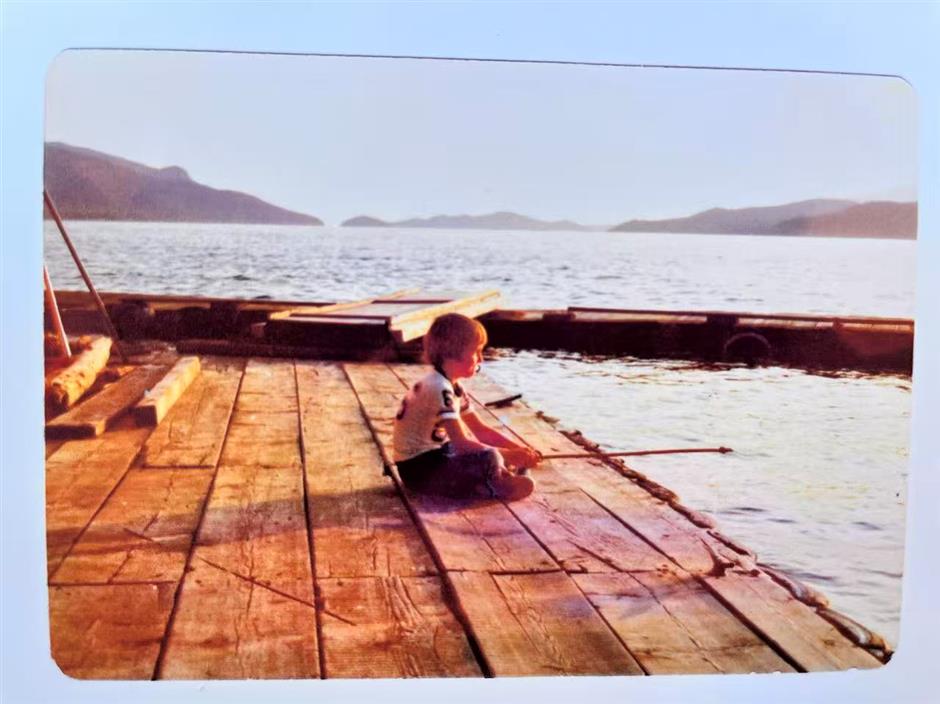
Mark: So, I'm a little boy growing up in Canada, near Vancouver. Studied accounting in Vancouver.
CNS: Wait a second. You studied accounting when you were a little boy? Did you wear a little green visor and a toy adding machine?
Mark: Yeah, I'd always dreamed of that. (laughs) Most of my peers wanted to be firefighters. I was just happy to do numbers. Anyway, I was a boy. Then I grew into a man. Then I started studying accounting in Vancouver. So, I was working with KPMG in Vancouver, and it's around the time the wall comes down in Europe. All of the big firms were looking for accountants to go to Eastern Europe to open up offices. They were looking specifically for Canadians, Brits, and Australians. I decided to go to St. Petersburg, Russia, for two years. I wasn't a super adventurous world traveler or anything, but I just thought it was a great opportunity. It was supposed to be two years and then back to Canada. It ended up being longer.
CNS: Why did you stay longer?
Mark: It was so wild and so cool, and anything could happen every day. One example: our office was upstairs above a bakery. I didn't know this at the time, but we were not totally authorized to be in that building. So there would be times when inspectors would come in, and we would have to make it look as though we were part of the bakery. All of the desks would get cleared of any English language books, and we were supposed to look like the training center for the bakery. It was just this little bakery making buns with cabbage in them, and we were supposed to be the "training facility" for it. They put flour on our desks and bread-making tools and stuff. The foreigners who weren't fluent in Russian were told to stay away. Every day, crazy stuff would happen, and you would have to find ways around it.
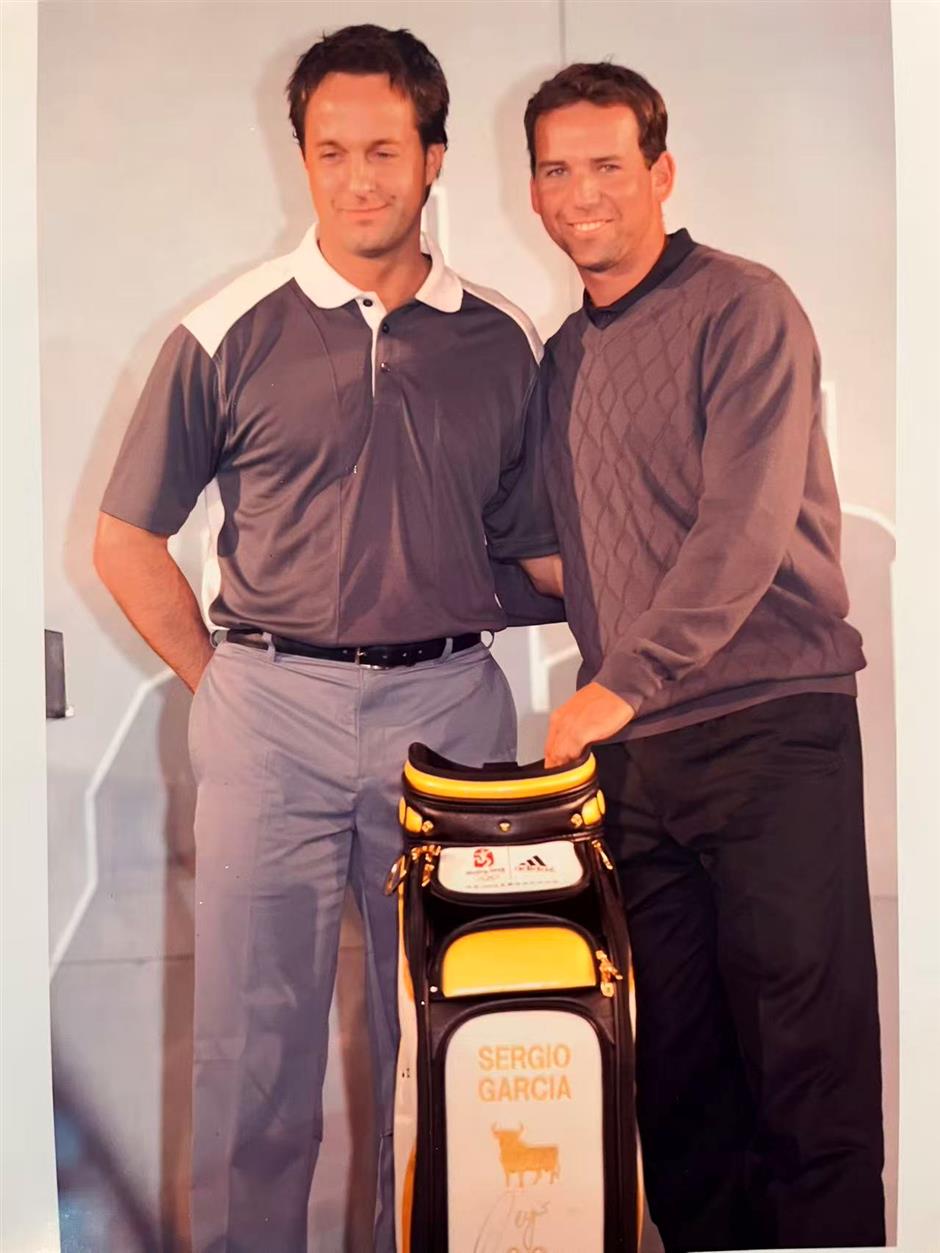
Then we had that financial crisis in 1997. What was super fun and cool turned really miserable, with empty grocery shelves. So I had an opportunity to work with Adidas in Germany. The office I worked in was the actual former home of Adi Dassler, the founder of Adidas. I was doing internal audits, so I was based in this little village, but I'd go off to Adidas Greece for two months, come back for a week, go to Adidas Lebanon for two months, come back for a week, go to Adidas Russia for two months. I ended up working for Adidas for twelve years, moving with them from Germany to England to California, where I moved into the golf side of the business, TaylorMade. With TaylorMade I started to work in Asia. Malaysia for a few months, then Korea for a year and a half. And then in 2008, I came to China, as the managing director for TaylorMade for Greater China. Then there was another downturn in the economy, especially in the US with the whole housing market. So I decided to stay in China, but look for another job here. That's when I ended up working for ASC Fine Wines.
CNS: How did you pivot from sports gear to wine?
Mark: Well, the founder of ASC is a Canadian. He had a really compelling story. But also, from a very young age, I was into cooking. And from cooking, later on it became an interest in wine, interest in cocktails, interest in dining out. All those places I was travelling for work, the most interesting thing for me was always to see how different cultures socialize around food and drink.
We had an event coming where the baron from Château Lafite was coming to China for the first time, and I was in charge of organizing this huge wine dinner for 200 people. I obviously invited direct customers, hoteliers, sommeliers, people like that. But one area I wanted to keep a portion of seats for was business development. So I looked at nightlife. I'm not a real club guy, but my team helped me suss out what was big for nightlife in China, and at that point it was Muse Group. So through that event, I met Michael Sun of Muse Group and one of his silent partners. I fell in love with this silent partner, and she eventually became my life partner as well as my business partner.
And eventually, like with all the things Muse Group was doing, they had this opportunity to open something with Bacardi, more specifically Grey Goose. Michael asked me to run with it. I was in my 40s. I had done corporate work for about 20 years. So I thought, "What the hell? Cool opportunity!" And I quit ASC and opened what ultimately became The Nest. You know, for the Goose. Get it?
CNS: The Cannery doesn't strike me as the least bit branded. What informs the concept behind this place?
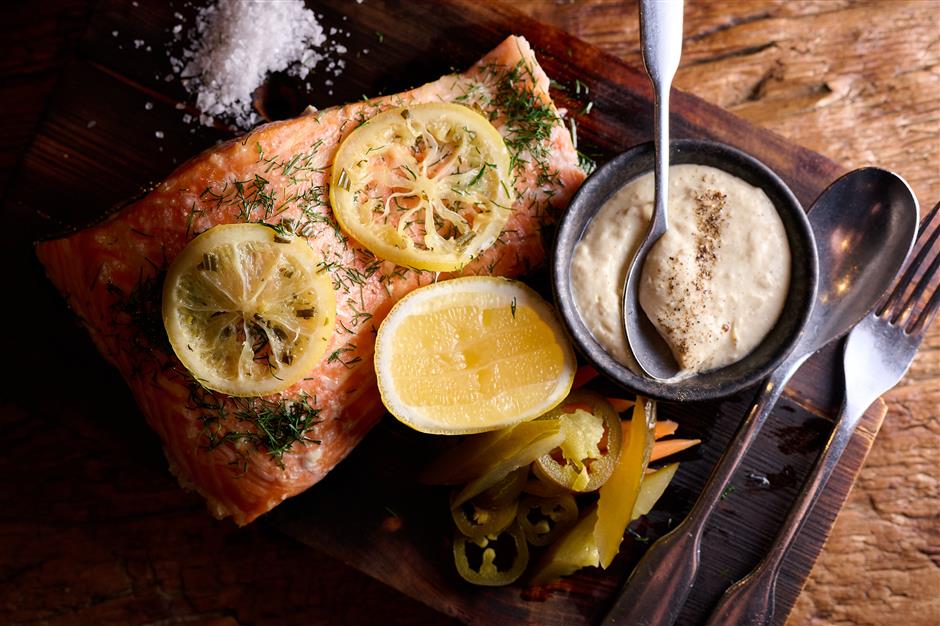
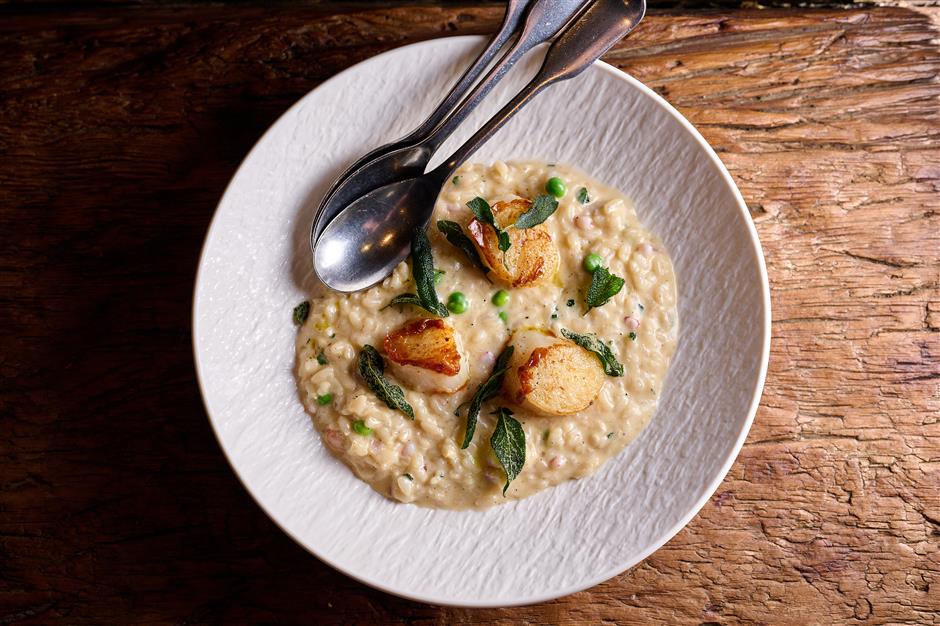
Mark: The whole idea for The Cannery was canned seafood. I was going back to my childhood. My dad was the cook at home. That's what probably gave me an interest in cooking in the first place. So he'd cook, and after dinner, he and I would clean up, and we'd always open up a can of something like smoked oysters, smoked tuna, kippers. He'd make some toast, and we'd snack and chat a little bit. That was the starting point. Then I wanted to evoke the Pacific Northwest, Vancouver, Seattle, that whole coastline down to San Francisco, and all the foods that come from that region.
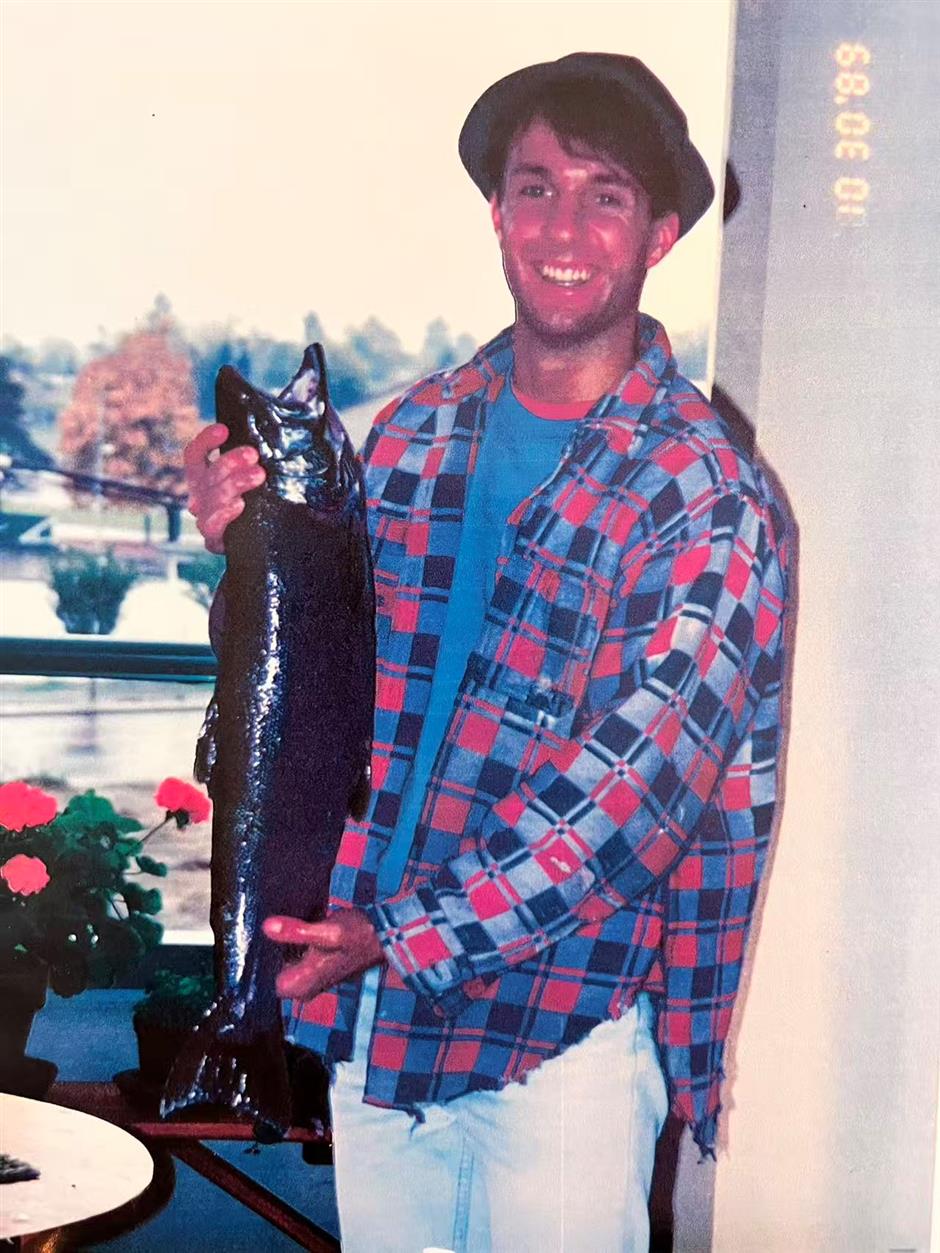
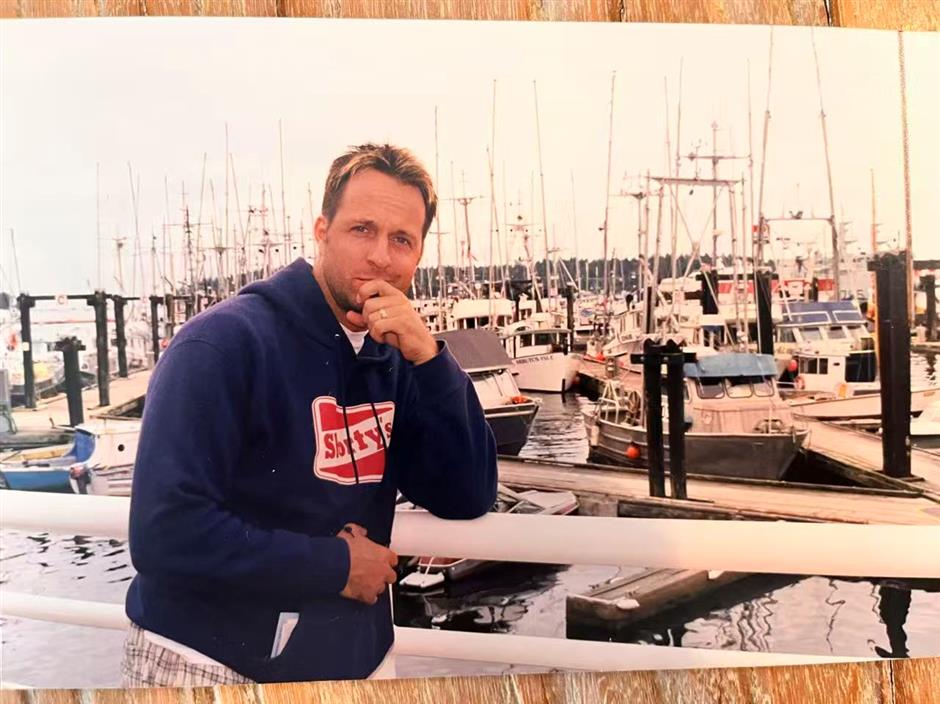
The Cannery brought a touch of the Pacific Northwest to Shanghai
Get the Hell Out or Fight
That was a year ago. The night I came back, the same place was called Juju, and it was, technically, not open yet. The lighting wasn't finished, the people at the other tables were the first anyone had ever served there, and Mark and Luis, the Uruguayan beef man who is now his partner, were still arguing about how many dips come with the churros.
CNS: So, Mark, tell us where you are at now, and take us into the question that is on everyone's mind. Why close Cannery?
Mark: Oh, Jacob. I feel a little bit rejuvenated, a little bit re-energized. I was so focused on and working so hard on everything with Cannery, Cannery, Cannery, trying so many things to drive it and keep it alive. But in a way, after three years, you've tried everything, you've done everything you could do, and you get stale. This challenge, this uncomfortable place of doing something new again, even if what's new for me is old for me, is daunting, and it's exciting at the same time. I feel kind of alive again.
If you had asked me a year ago, "Where are you in five years?" for sure I was back on the West Coast, Vancouver or somewhere in California, doing kind of a wind-down project. And now I feel like...
CNS: Yeah, but what caused the turnaround bit?
Mark: Probably it was that drop-off this year. We've been doing okay, a lot of work to keep our heads above water, but heads above water and doing okay. But things dropped off in January and February, normal, but they didn't really pick up in March as they normally do. And with all the efforts, it just wasn't returning. And it became, well, we can't go through two more years like this; we have to make a change. And it was either get the hell out or fight. And we decided to fight.
Ten years ago, 15 years ago, when I was doing Nest, I wasn't young then either, but maybe I was more naive. I didn't have the same stress or nervousness or urgency as I have now. And I love the idea of trying to connect: can I, as a 57-year-old guy from Canada, connect with this young Chinese audience? It's a challenge, and I want to see if I can. And I believe I can. Not I, we. I believe we can.
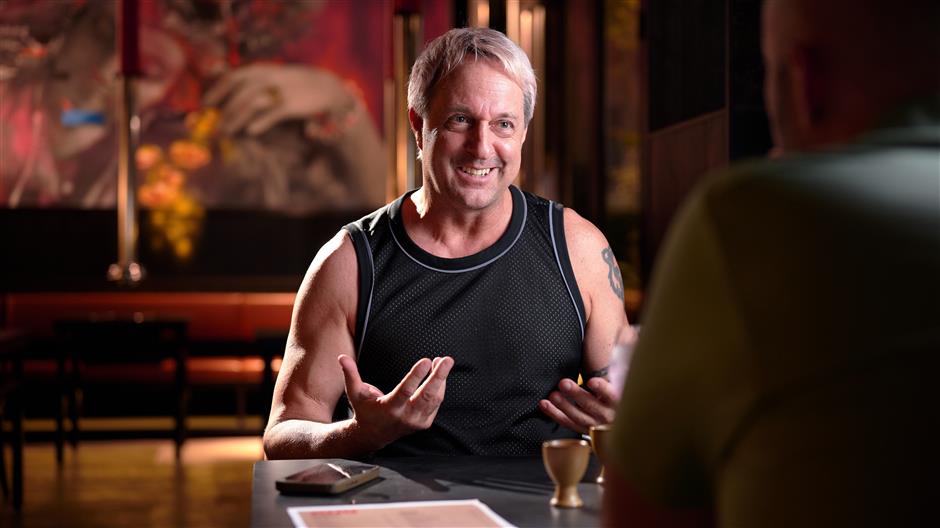
The "we" is Luis. The "how" is that Mark spent a year and a half in Korea in his TaylorMade days and never got over the food, so he wrote the entire menu himself before he had anyone to cook it, then found a consulting chef in Seoul through, of all people, his burrata supplier. The Cannery closed to the public on August 6. The chef landed on the 7th and spent three days, 12 hours a day, tasting everything, then came back for a second three-day round the weekend before I sat down. "If we looked at the menu today versus the menu I had given him," Mark says, "the menu hasn't changed that much. Of course, everything is definitely better than it would have been otherwise."
Bouncy
(The short rib lands. Four hundred grams, on the bone, 24 hours in a light marinade.)
Mark: So this is Luis' M7 short rib from Uruguay. The first way to try it is just on its own. Then we've got some sauces for you to try also. That's one of them: that toasted barley ssamjang.
CNS: It's very, very voluptuous.
Mark: Yeah, it's bouncy.
CNS: I'm going to be here a lot!
(laughter)
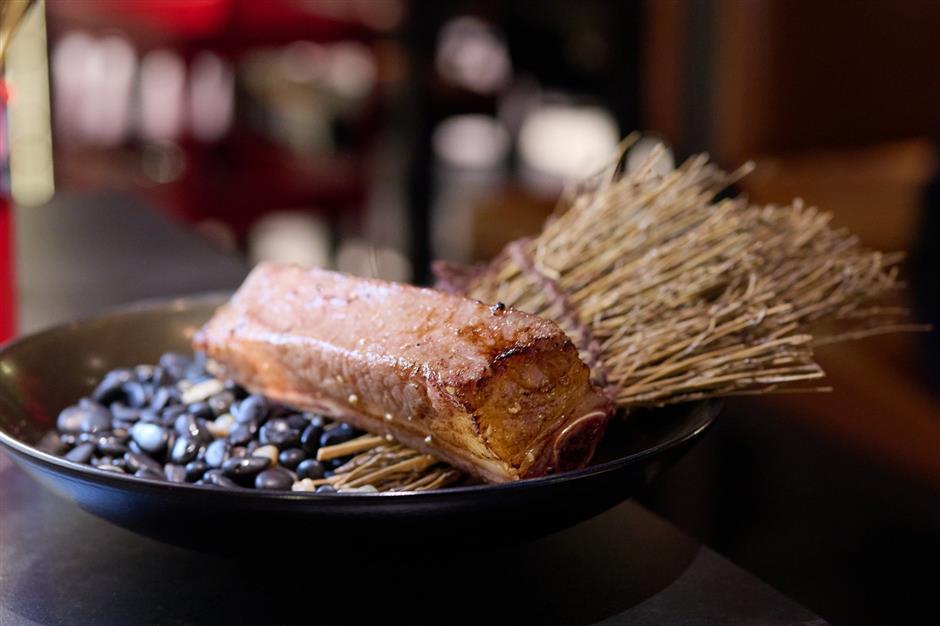
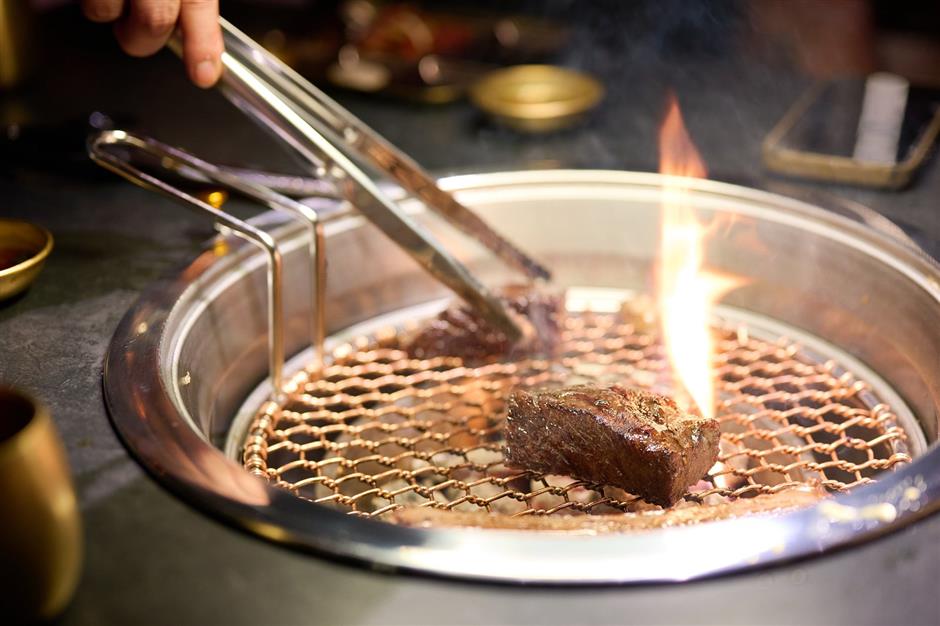
It is the most expensive thing on the menu, feeds three or four, and takes the griller about 10 minutes to manage: the main meat comes off first, then what's left on the bone – the intercostal sinew and fat – goes back on the fire, gets cut off, and goes back on again. Chewy, crispy, "but a lot tasty." Which raised the question of who is holding the tongs.
CNS: In terms of experience, does each table have a griller, or can people do it themselves?
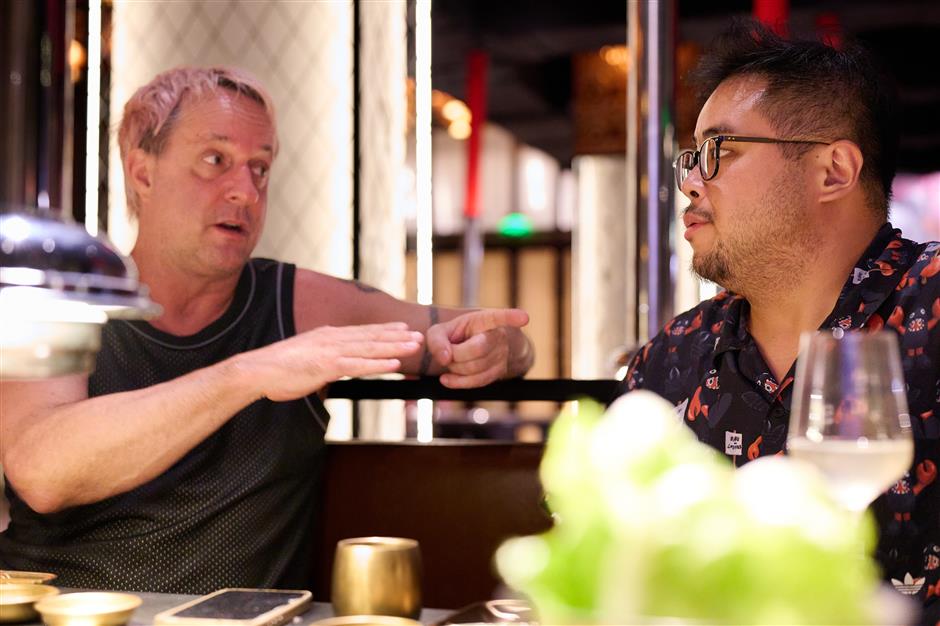
Mark: They can do it themselves, but most Chinese will expect it to be cooked for them. I would never go to a Korean barbecue and have someone cook for me, and I'll tell you why. My experience is that the way Chinese generally want their meat cooked – char, or the Maillard effect – is sometimes scary. If they see any darkened bits, they worry. So a lot of Korean barbecues here will just keep turning it, turning it, turning it, that you never get a char on the meat. What they're basically doing is cooking the meat in its own juices. In a sense, it's kind of like hot pot.
We have trained our staff to cook both ways. They'll have to talk to the guests: "Do you want Western or Korean-style barbecue?" Give the people what they want. No judgment; have it how you want.
The banchan tray has eight bowls. Two of them, a pickled garlic leaf and a dried radish in gochujang with a crunch Mark keeps going back to, come from a Korean kimchi maker in Shanghai he calls "the kimchi guru." The onion kimchi, the cucumber, the pa-muchim (scallion split lengthwise with chili and sesame oil, the same one on the tartare), the ssamjang and the cabbage kimchi are made in the building. And then there is the one that isn't Korean at all: pumpkin with passion fruit, an idea from Brenda. "Totally non-traditional, but I think it's delicious," Mark says. "This time around is not about everything having to be traditional Korean." A week later, on my second visit to Juju, my better half markedly noted: "I like this; it's pumpkin?" We had just gotten back from Korea. The slightly sweet, tangy zip from the passion fruit provides contrast to the salt and ferment of everything else.
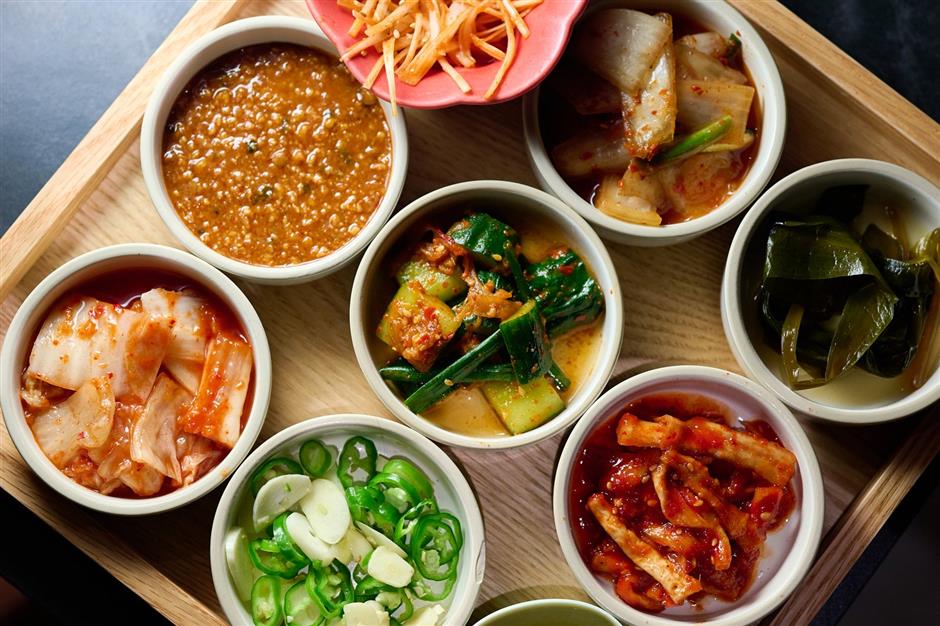
CNS: So glad that you opened so close to my house! We loved Cannery, but we were only here during the day for lunches and brunches. We came because we were always babysitting our friend's dog, and there just weren't a lot of places nearby that you could go.
Mark: By the way, we won't be dog-friendly anymore with Juju. Raw meat on tables and dogs don't really go together very well. And the whole charcoal and fire moving around...
(Another plate. Thin, marbled chuck, the Salchi-Sal and a small gold dish of something pale.)
Mark: This is a brown butter black truffle sauce that goes with this chuck. Try that with the meat. That would actually be really good on your sourdough also.
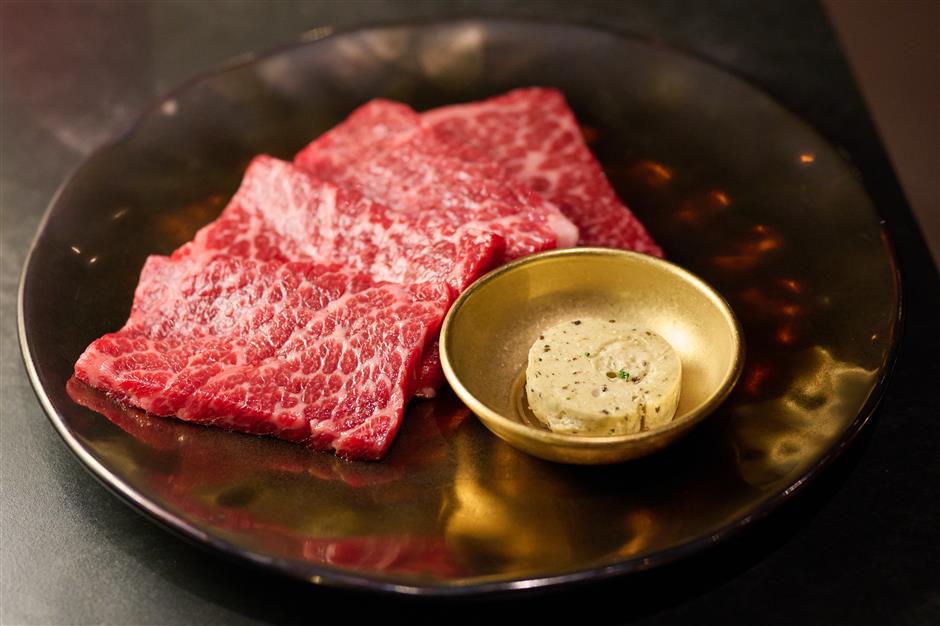
CNS: Mark, this truffle brown butter would go well with some sourdough.
Mark: You can bring your own sourdough. BYOB: Bring your own bread!
CNS: So, Luis, tell me about how you guys got connected.
Luis: How did we connect? Wow, that's a long story! Actually, we met back in the days at Hai Yaki, having dinner. And then we organized a tasting, right?
Mark: Because I think at that point I had Nest, maybe Cannery?
Luis: Cannery, you already had Cannery. I think that was in 2017. And Mark was one of my first customers back then. He supported me a lot. He fell in love with our beef. Even when our beef wasn't this good! (laughter) Probably it's because, Mark, at that moment you were using too much Australian beef, so you really wanted to find something different. When he proposed this project to me, I doubted for like, what, five days, six at most! (laughter)
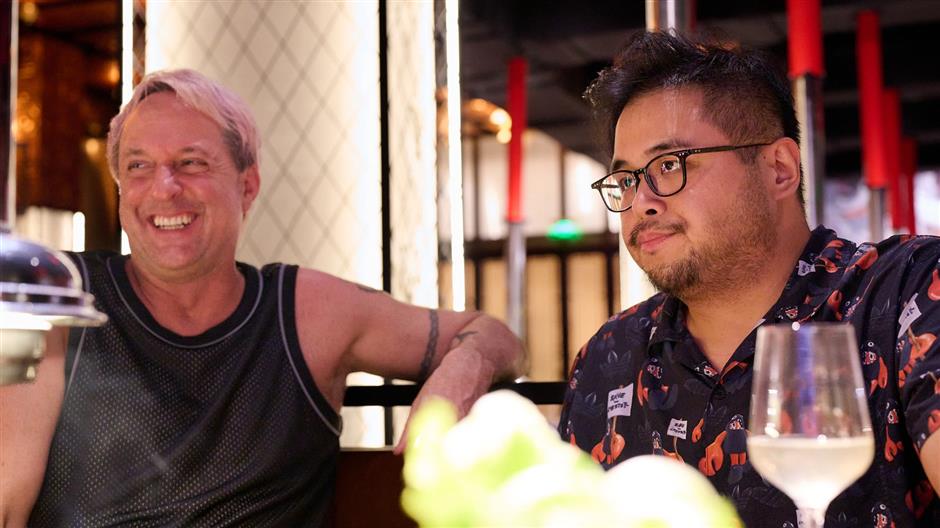
Luis is not, Mark is careful to point out, just an importer. He and his partner Jackie own the farm in Uruguay; the company, UYYU, runs the whole chain from breeding to the plate. Luis has been in China for 11 years, cannot take on new clients because there isn't enough supply, and is using six cuts of the animal to make fourteen dishes here, including the bone-in short rib and the chuck; the cuts normally can't sell in China at all.
CNS: Tell me about the genetics of this cow. What makes it distinctive and unique? From the sperm...
Luis: Well, from the sperm, we're starting from the sperm! You don't want to know how we get the sperm! (laughter) The Wagyu breed is not something that we invented. Originally, of course, it's Japan. But Japan doesn't sell their specimen. It's something they protect too much. Who sold it to us? Australia.
Back in 1989, the father of our geneticist, Martin, went to Japan, and while walking on the streets of Tokyo, he saw why the cow there is so expensive. Uruguay's price at that moment was two dollars per kilo. Japan was selling it at 25, 30!
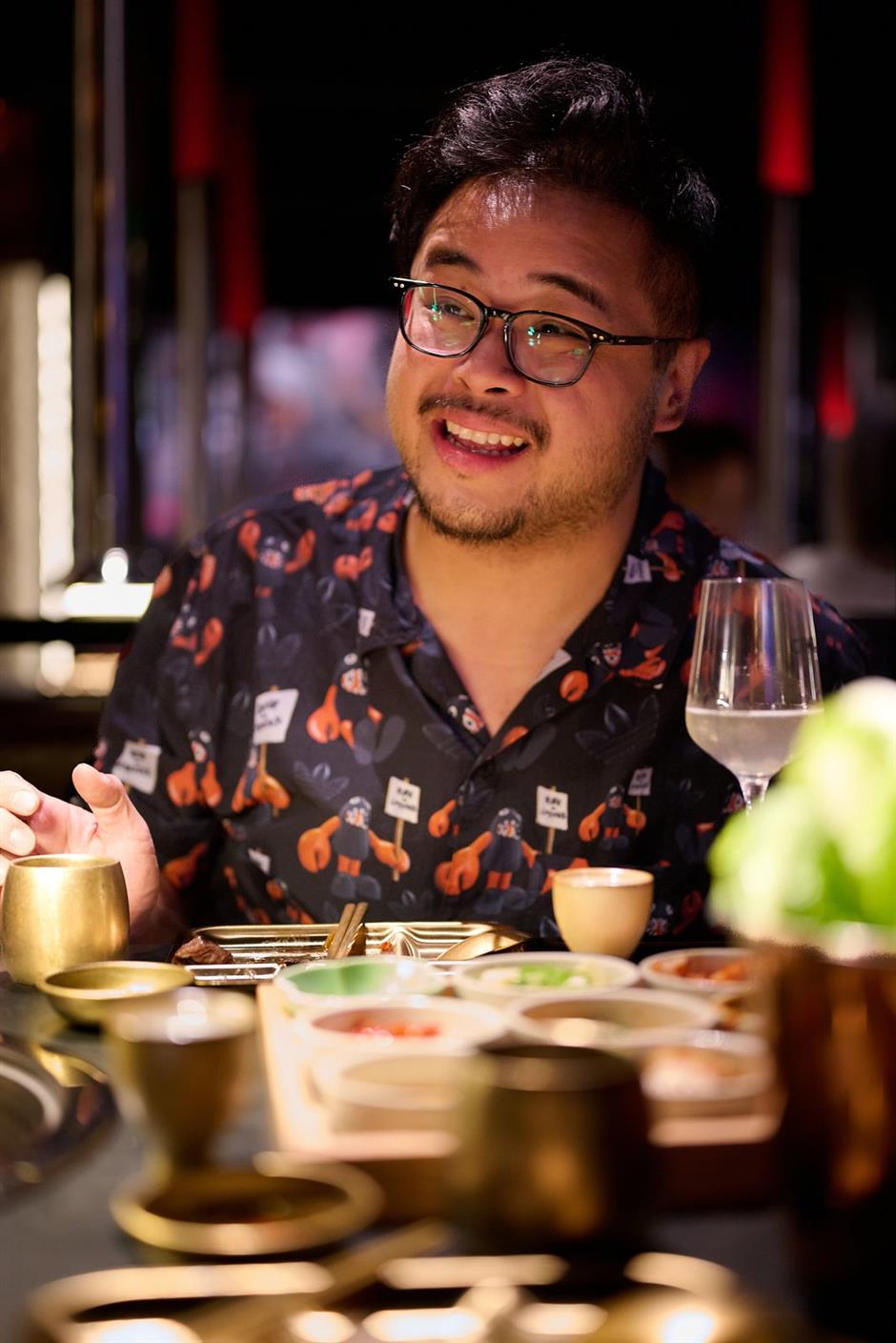
CNS: Twenty-five dollars?
Luis: Dollars!
(The rest is a breeding story, and a good one, so here it is in plain language. Martin's father, a veterinarian, found one family in Tasmania selling Wagyu genetics in 1992 or 1993 for 300,000 Australian dollars, half of it paid by the Uruguayan beef institute and half out of his own pocket. But Uruguayan summers hit 44 degrees, and a Japanese cow bred for Osaka weather cannot simply be dropped into that. So he did it the slow way. He took the toughest cattle Uruguay had, the Aberdeen Angus, and inseminated a female with the Wagyu. The calf, half Angus and half Wagyu, is what breeders call F1: first generation. Breed an F1 female back to a full Wagyu bull and you get F2, three quarters Wagyu. Do it again, F3, seven eighths. Again, F4, roughly 94 percent Wagyu, which is where the industry starts calling an animal purebred. Each step takes years, because a cow calves slowly and you don't know what you've bred until you've raised it, slaughtered it and tasted it. Luis' farm went from F1 to F2 in eight years and has been at it for 34. The M in M7, for what it's worth, is marbling, the fat threaded through the muscle, on a scale that tops out around M9 and above; the higher the number, the richer, and the sooner you're full.)
CNS: So the cows that you're feeding us are the results of four decades of work.
Luis: Exactly. Four decades. All the beef that we have here at Juju is M7. The highest we can reach is M9 plus, from the full-blood mothers, and those we save for our Michelin restaurants. But because of a personal taste of Mark and me, we don't like that fatty beef. After seven, to me, it's impossible to eat, especially for this purpose.
CNS: If you're going to have Korean barbecue, you're going to go to the bars and the clubs afterwards. If you're eating M9 and weighed down by all that fat, you won't feel sexy...
Luis: Completely agree! Wait thirty minutes, and you will see that you are not that full, actually. Why? Because this fat is something special.
(Uruguayan law, Luis says, forbids the closed feedlot; the cows have to keep pasturing, so they eat grass their whole lives, take no hormones, and come to slaughter around 20 percent lighter than an Australian Wagyu. Nobody brushes them daily like they do in Japan. They are left alone.)
CNS: They're happy cows.
Mark: Yessss. There's some really happy cows in Uruguay. We had some of the happy cow in steak form at Cannery before. When Luis first brought one piece that he hand-carried back, I've never had beef like that before. Never, honestly. I can still remember that day, eating it out there.
(The skirt arrives, with a green sauce.)
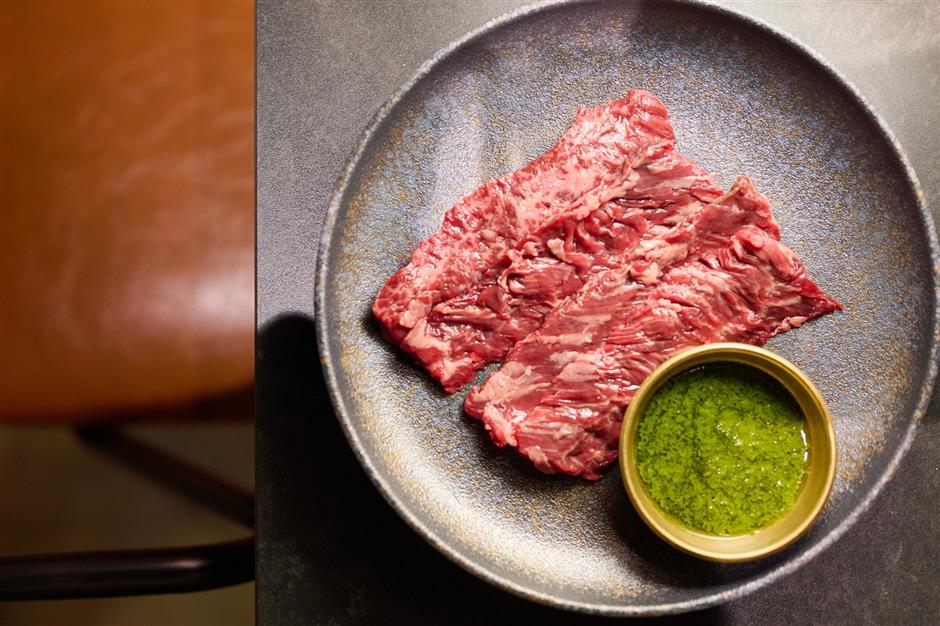
Mark: This beef is a very South American cut. So we made this sauce like a chimichurri, because of the South American vibe, but we made it a Korean chimichurri. It's with kkaennip, the shiso leaf, instead of all the herbs that normally go into a chimichurri, and kombu.
CNS: This is something that you guys created yourself? You wouldn't even get this in Korea, right?
Mark: This is a Shanghai creation. This is my favorite cut of beef, always.
Luis: This is our butcher's cut. Back in the days in Argentina and Uruguay, the guys hanging the meat in the butcheries were very poor. This is the first cut you see when you cut the cow in half. Nobody cared about this cut, because it wasn't a prime cut. So these cuts were made on the grill by the butchers.
Mark: This cut with this, I think this korean-chimichurri is completely unique. This is what happens when you have a Canadian and a South American Chinese guy do a Korean barbecue place in Shanghai together. This is the perfect amalgam of our nonsense! (laughter).
Luis: Canada, here, north. Uruguay, south. We are in opposite poles, basically, but we created this and it's beautiful!
Who's Andy?
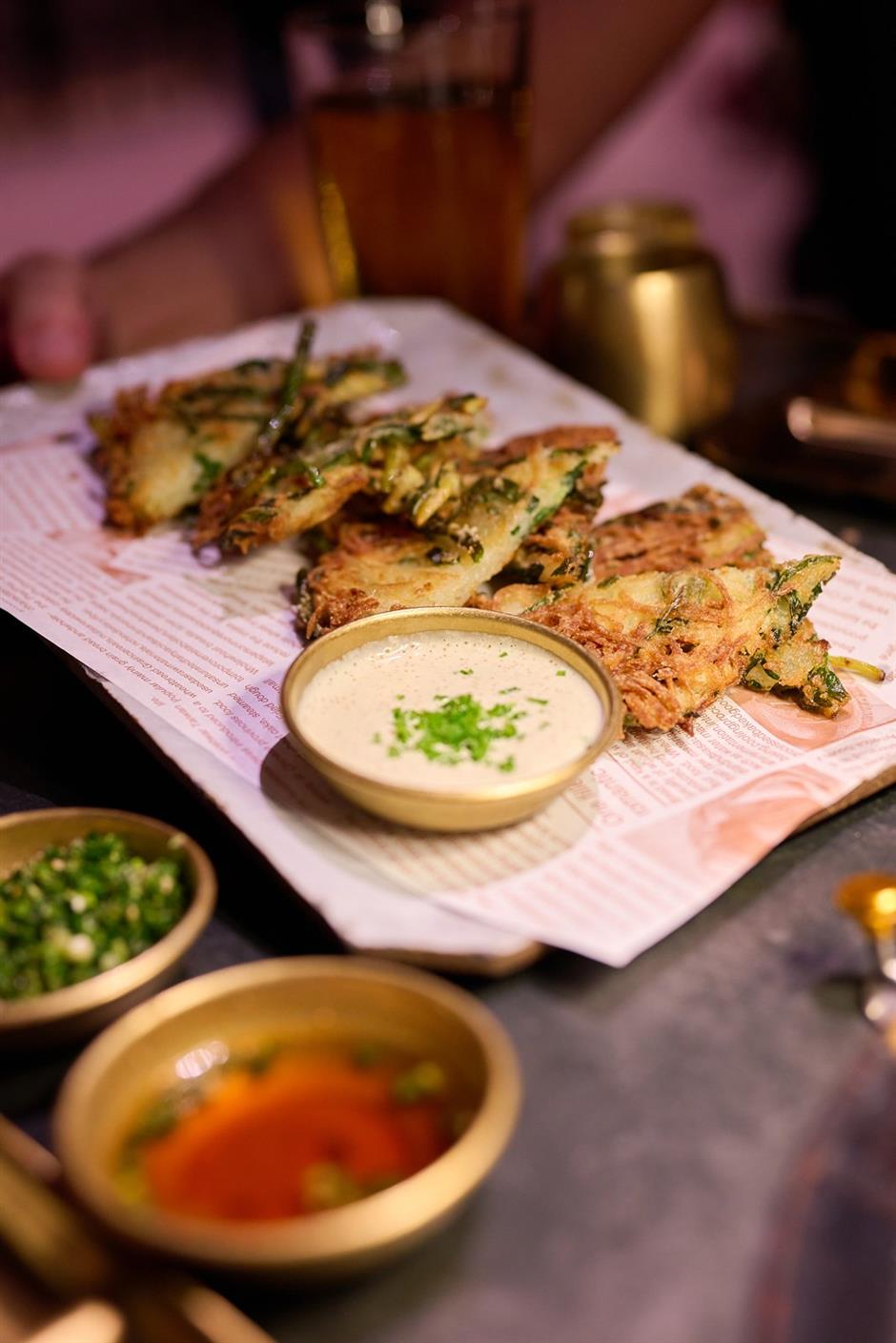
(The pancake. Mark wanted it crispy. It is crispy.)
CNS: Horseradish? I haven't even tried the sauce yet, but I love it. It is definitely crispy. You don't know what's in the sauce, Mark?
Mark: It changed over the weekend.
CNS: It feels horseradish-y.
Mark: The sauce is actually new today, but the crispiness is what I was going for.
Brandon (our photographer): I've got to ask. Was Andy Hall broken when everything came down?
Mark: You know what, he was super supportive of it.
CNS: Hmm? Who's Andy?
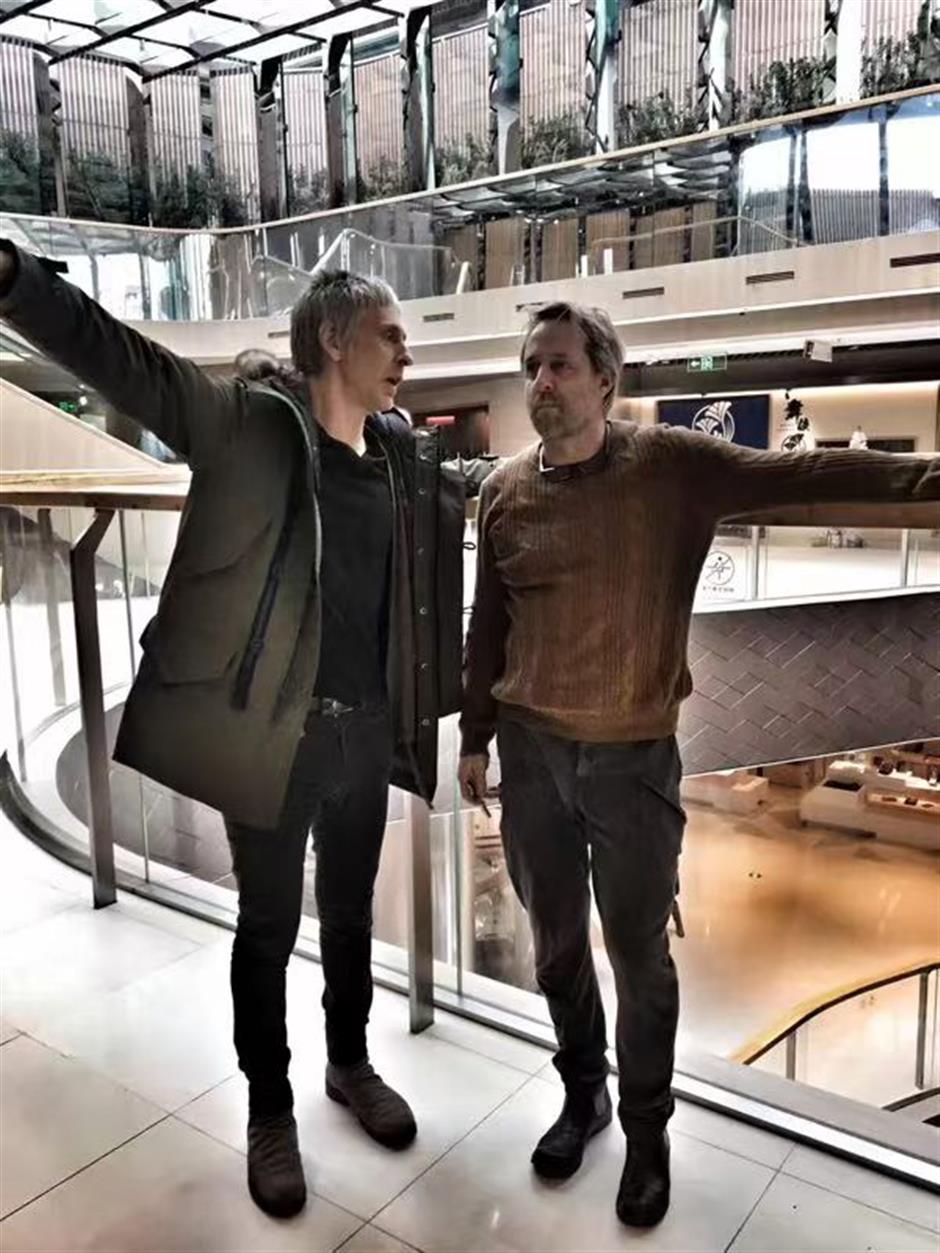
Mark: Andy Hall. He's a funny friend of mine that I've known since I came to China, probably since 2008. We're in some ways like brothers, but kind of the brothers that aren't in contact all the time, and then a year later... I love Andy really like a brother.
I was right at that time of making that decision about changing this place, and I was sitting outside. It was a weeknight, a Wednesday, Thursday, something like that. Andy came walking up, and I really hadn't seen him for at least a year, with his girlfriend, just coming in for a drink. I was really torn on this whole thing; it was kind of an emotional time. I saw him and I just broke totally down crying! It was so weird, and I couldn't control myself. I was like, "Andy, I love you so much, I love you so much!" Any is this sweet sweet soul, who helped me design The Nest, Cannery, RYE&CO, and even a project we did together for Gibson (guitars, etc) flagship store on Hengshan road ...years before i got into F&B!
Everyone thought I was insane; all of my staff had never seen me like this before. But it was just somehow so emotional to see him when I was going through that decision. He's always been someone I worked with really closely on building the places and the concepts. We sat here for a couple of hours drinking wine and talking, and I was literally almost crying the whole time. He loved the idea of deconstructing this.
His company is called MQ. He's a Brit. He looks like an old Brit rocker, like Rod Stewart. He's had the same hairstyle for as long as I've known him. He seems very cold on the outside, like so many Brits do, very stoic. But he's so soft and warm person inside; he's a beautiful person.
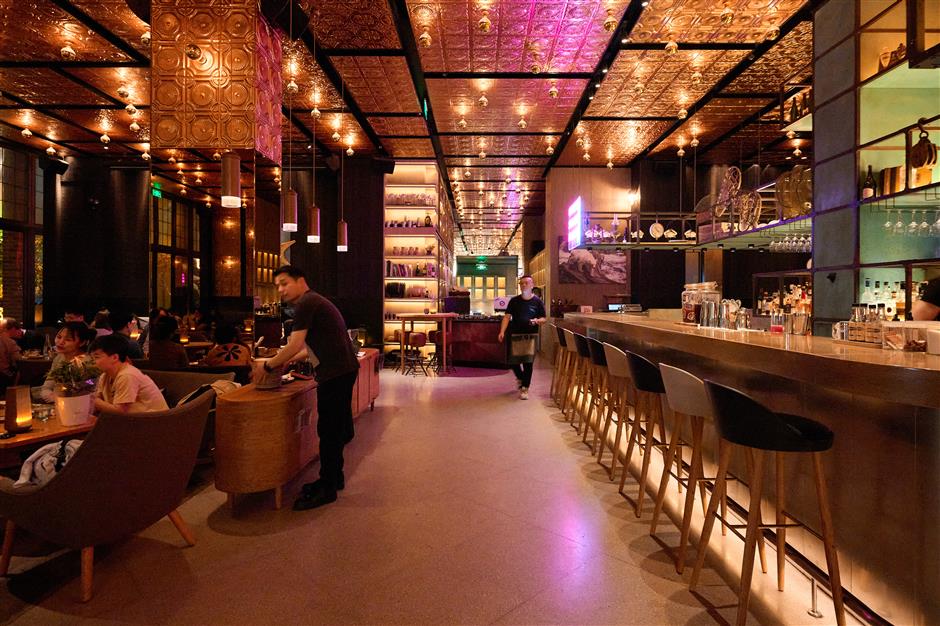
The Cannery Before
Juju... Now
CNS: If he'd be amenable to a feature, you guys make it sound like he's a good story.
Mark: He's a great story. I don't know why he isn't ever featured in stories; it almost makes me think he avoids it. But I'll ask him for sure. I'll forever be indebted to him. If one can say I've had any success in F&B, I owe a lot of it to Andy.
(Two of Mark's designer friends weighed in on the teardown, and their advice was perfectly opposed. Swing from OHA Group said keep the ceiling. Andy said tear it all down. In a sense they both won out, the gold ceiling still present over the bar, but bare ceiling in the dining area. On the art, Mark sent Andy twenty images without saying who painted what. Andy picked every one by WOOJS. "I'm like, oh, thank God, my taste is okay.")
I've Got to Take My Girl There
CNS: I was telling Brandon earlier, you guys have a real concept that differentiates it from the market.
Mark: I'm happy to hear that, because I believe so. Every Korean barbecue place, as great as grilling food at your table is, the energy that comes from the fire, the crackling fat, it's incredible in itself. And I feel like maybe a lot of places just feel like, "Okay, we can rely on that." But why are they always playing ballady music through a bad sound system, not having anything visually stimulating? There's a great ceremony to the barbecue and the drinking culture. We're just amping it up.
(One note from me, for what it's worth: our photographer shot the room before the floodlights came up, and in those frames the paintings pop and the place looks like somewhere you take someone to impress them.)
CNS: Do you remember People 7?
Mark: Yeah, People 7, yeah.
CNS: It was that spotlight, and it was just you and the person. And it didn't matter if you felt like you didn't look beautiful, because it was dim enough to feel sexy anyway, you know? When I was looking at it in the photos, with the dim lights, it was striking. It was like, "Oh, I've got to take my girl there."
Mark: So for us, the obvious thing is these downlights are too bright and they're too white. We're looking to do something warmer and dimmer. And we haven't even touched the dinner setting versus the later night setting, which we've always done in the past, three or four different light settings during the course of service. I really appreciate your comment. You're absolutely right.
CNS: But I like everything. Yeah man, I'm glad that you guys are here.
Mark: Thank you.
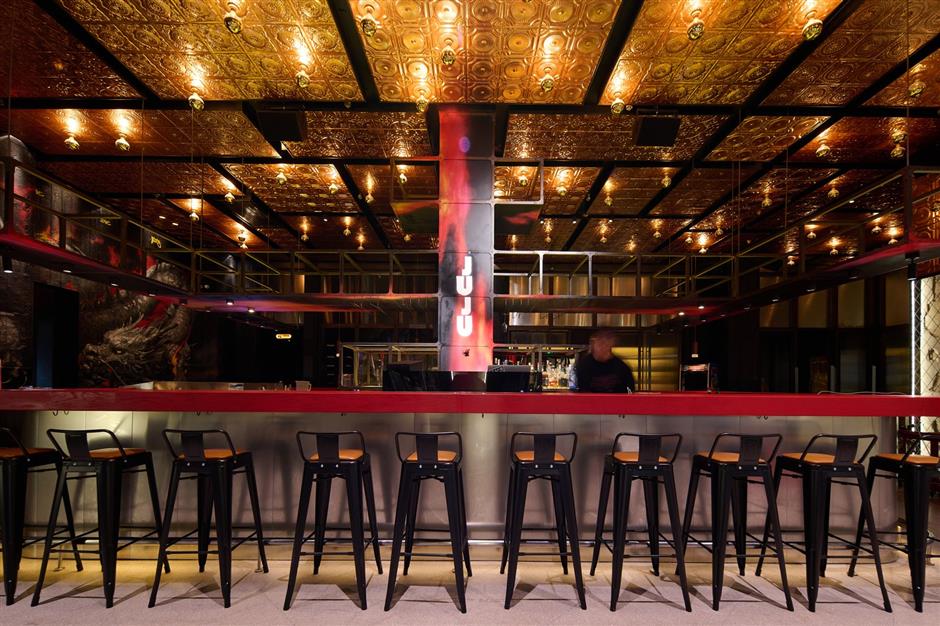
CNS: It looks like you're really emphasizing this place being more than just a BBQ joint. You want people to hang out. And with the price point you have here, you'll have that younger audience that loves to spend on drinks.
Mark: Small values, right? Like this is 28 yuan (Mark holds up a CAS Beer). Cannery, this would have been 68 yuan. I mean, it's a different beer, but beer is beer in the stomach; you can only drink so many. But yeah, the percentages are nice, and we need that volume. And if they're buying more soju, the more people are relaxing.
CNS: Are you guys going to do happy hours, like soju bomb happy hours?
Mark: For sure. Ten o'clock onward, free-flow programs or happy hour programs. Monday we'll probably do some kind of indirect industry night. I don't want to call it industry night, but I think...
CNS: Well, no one calls it that. It just is. You just invite the right people in.
Mark: Yeah, there's definitely space for that.
I Want You to Kill Me
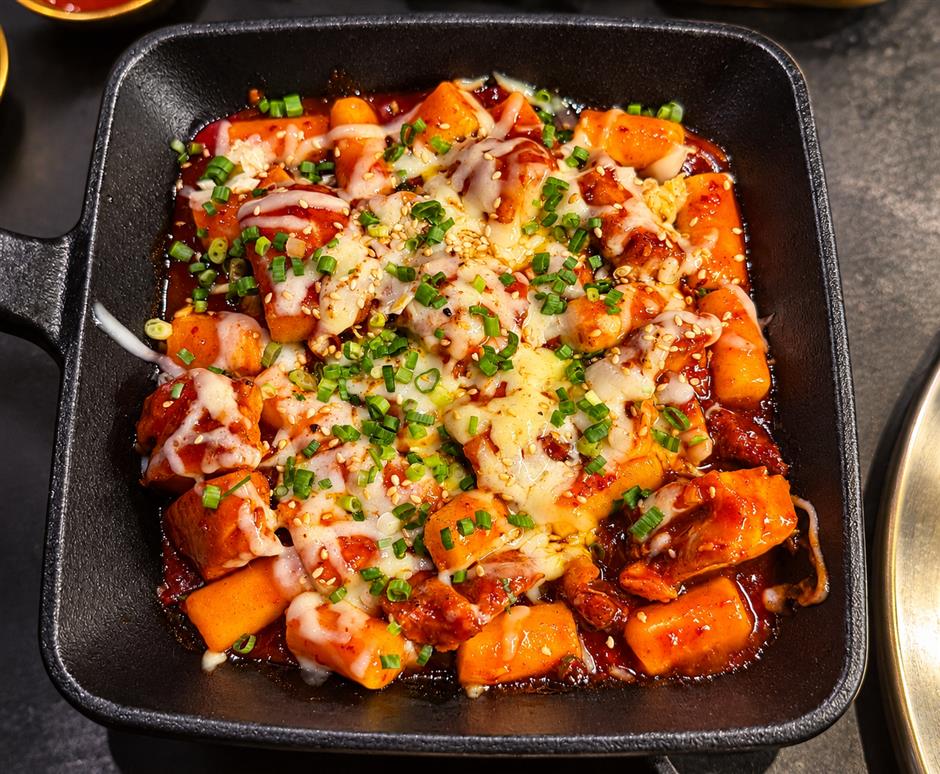
(The Buldak. Fire chicken, tteokbokki, cheese. It comes in Fire and Nuclear.)
CNS: You did Nuclear, right? With this one?
Mark: I'm sure it's not spicy enough. Yeah, it's not spicy enough. That's only moderately spicy.
CNS: That's good. But I'm curious; next time I come in, I want to try Mark level.
Mark: Yeah, it's not the challenge it should be.
CNS: Mmm. It's still good.
Mark: It's not that...
CNS: It's building.
Mark: Yeah, it'll hit you on the...
CNS: It's building.
Mark: Yeah. When you get some sauce. But it should be better. This should be the normal level.
CNS: Oh man. Yes, it's building.
Mark: It should be more spicy, right?
CNS: No, I like it. It's good. BUT...I'm down to burn my face off with spicy next time.
Mark: I would double it.
(The chef comes over to say hello.)
Mark: It's good. It's really good. It's just... it's not killing me. I want you to kill me.
Chef: Okay, next time, boss.
(Somewhere in here we mourned Sage together, which was Mark's favorite restaurant of the last five years and one of mine, and agreed about Rambu. "He's the most brilliant, interesting chef in the market now," Mark said of ChefJun. "Humble and real." Then the question of dessert came up, and the partners discovered they had not compared notes.)
CNS: Are you guys going to have dessert, by the way?
Luis: Only one: churros.
CNS: Churros, okay! Nice.
Luis: I never tried the churros, actually. I think we have four kinds of dips. How many sauces do we have for the churros, six or four?
Mark: Four, right?
Luis: Three. That's the only dessert that we have here, right?
Mark: Right now, yeah. But it's cool. It's a churro.
(The churro has a backstory. Once a month at The Cannery, Mark ran a Sunday dinner called Communion: a guest chef, fourteen seats in the back room, 300 yuan a head, bring your own wine, and nobody told you who was cooking or what. Chef Dylan, of Crush, did one and made churros, and Mark never got over them. So the Juju K-Churros, 48 yuan, are Dylan's, rolled in sesame and soybean flour instead of cinnamon sugar, with makgeolli cream, miso caramel and gochu berry dips, and piped into the letters of the restaurant's name. Three dips, says the menu.)
And now ending on a poignant note. A year ago, we ended our talk with Mark about the future.
CNS: So Mark, what's next on the horizon?
Mark: I think at this point in my life, I'll continue with this – hopefully for the foreseeable future. But I won't retire in China.
I don't think I can retire in China. And I'm not ready to retire yet from a work perspective, but, you know, maybe within the next three, four, five years, I'll move back. Brenda and I will move back to the West Coast somewhere. I want to work well into my, you know, later years. You know, not, like, heavy manual labor.
CNS: Are you not going to get a job as a longshoreman in your autumn years?
Mark: Maybe not. But perhaps a little restaurant or something like that. This was actually my dream when I was young. Even before I even considered accounting. I want to retire and have a little restaurant where I go fishing in the morning, and I catch something, and that becomes our catch of the day. Maybe it's a little wine bar. Maybe it's a little oyster bar where I'm involved in service and interacting with the guests. Something like that.
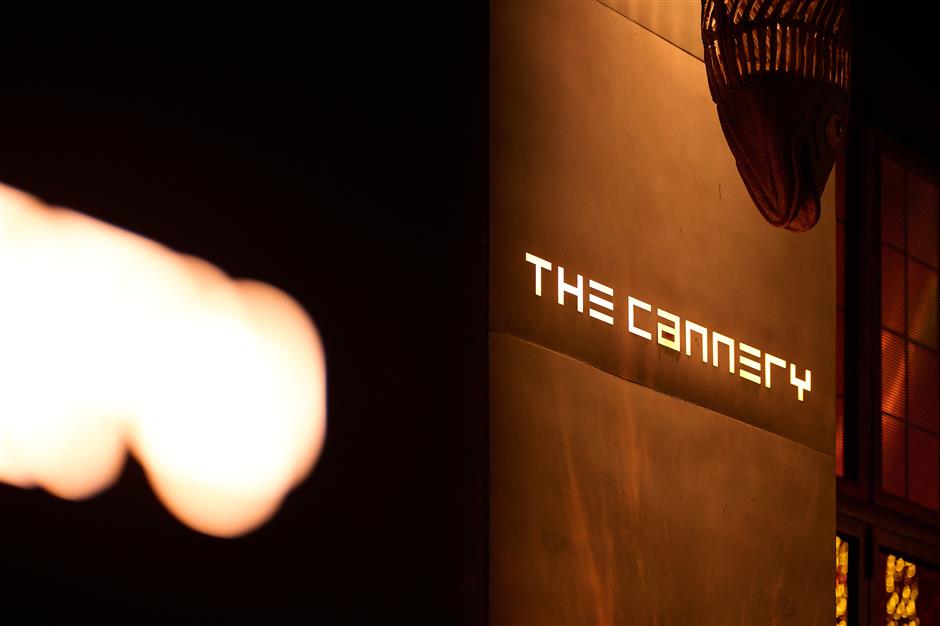
And The Cannery? Not dead, Mark insists. Resting. He has a space he loves, an old warehouse near Suzhou Creek that he found by accident on his bike, and that is as much as he'll let me print. "Cannery people didn't come to us because we were on Yuyuan Rd," he says. "They came because they became used to us. They'll come wherever we are."
So that's Mark Klingspon. A Canadian accountant who faked a bakery in St. Petersburg, fell for a nightclub investor over a bottle of Lafite, cried in front of his staff, tore out his own ceiling, and put a Korean chimichurri on a Uruguayan butcher's cut.
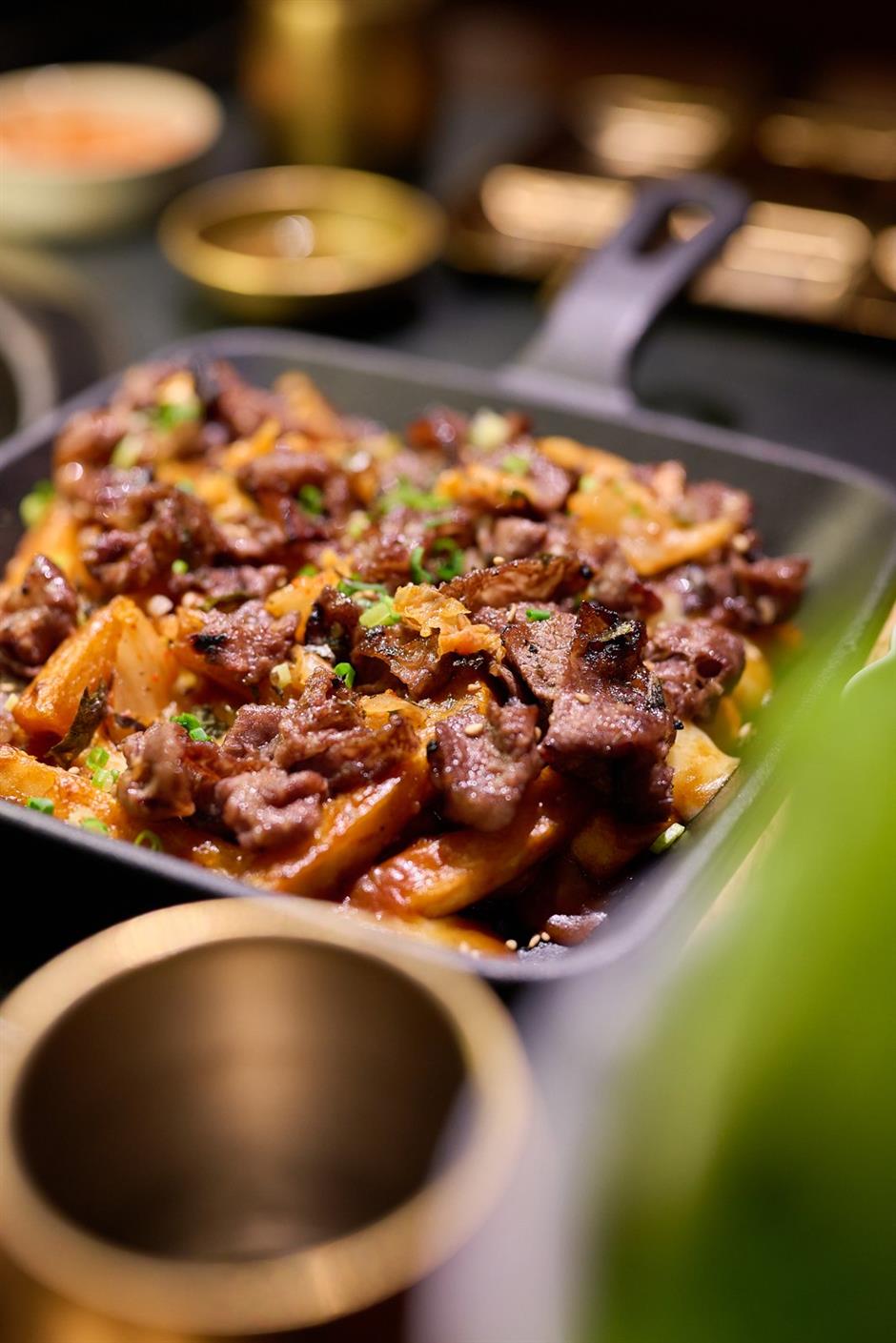
As for Juju, I went to Busan two days after my first meal with Mark at Juju. I had bulgogi at a place that is as authentic as you can get, right by the beach. I started thinking about Juju's bulgogi. Order it. And if you don't cook it yourself, ask for it Korean style.
If you go...
If you go
Juju 炭火烤肉 • 干杯小酒馆
Opening hours: 5pm–midnight
Address: Rm 106, 1107 Yuyuan Rd, by Jiangsu Rd, the former home of The Cannery.
Reservations on WeChat: CANNERYPETE
Prices: Charcoal cuts run from 78 yuan for the Beef Bites to 298 yuan for the Woo-Dae-Galbi (enough for three or four people); kitchen dishes are 38–98 yuan; Juju K-Churros are 48 yuan; and beer is 28 yuan. Tell them how you want your meat cooked. They will ask.
A few useful notes for anyone who has made it this far:
Is Juju Good?
Yes. We have been back five or six times in two weeks. The reasons:
1) Value for money makes this a highly repeatable adventure. You can spend 100–200 yuan per person and leave satisfied. The banchan fills you up.
2) It is keto-friendly. There is plenty of protein, with lots of low-carb options. This is a game changer. It's not easy to eat keto in SH.
3) It works for a bigger night out. If you are with spirited friends, spend a little more and get hammered on soju bombs (recommended). Korean barbecue is meant to be enjoyed in a sufficiently inebriated state.
The Food
The Beef Bulgogi is non-negotiable. We have ordered it on every one of our five visits, and we do not intend to stop. Rotate through the different cuts of meat each time you go; they have distinct styles and "moods".
If you are obsessed with death, order the Buldak. It is a fire-spice-marinated boneless chicken thigh with Korean rice cakes and melted cheese. Get the Nuclear option. As Mark said in the interview, it is the level to choose if you want to be killed. The Fire option is also very good, but Nuclear is for people who have not been punished in a while. If it gets to be too much, let it cool off a bit. It also travels well, and the leftovers are excellent with eggs for breakfast the next day.
The Vibe
This place doubles as an "impress your date" venue or a Friday-night spot to get wasted with your best buddies. Both work. Or take your boss if he needs to lighten up a bit.
The Damage
The flexible pricing means you can make this place a regular occurrence or save it for a promotion celebration.
Editor: Fu Rong
In Case You Missed It...
 Sep 22, 2026