China's First Fully AI-Made Cinema Feature Draws Sparse Audiences
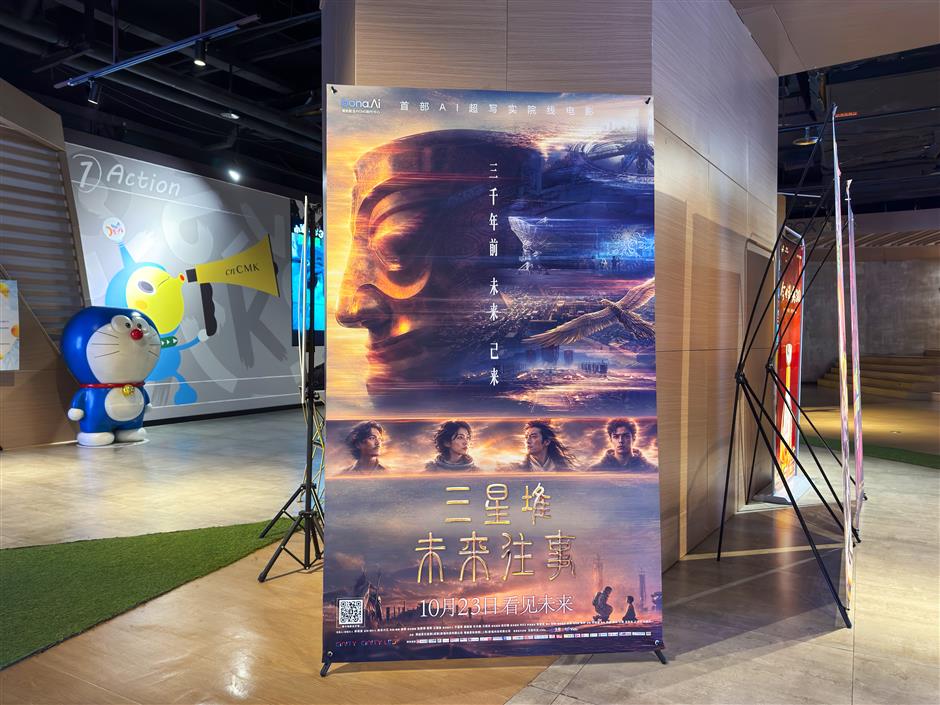
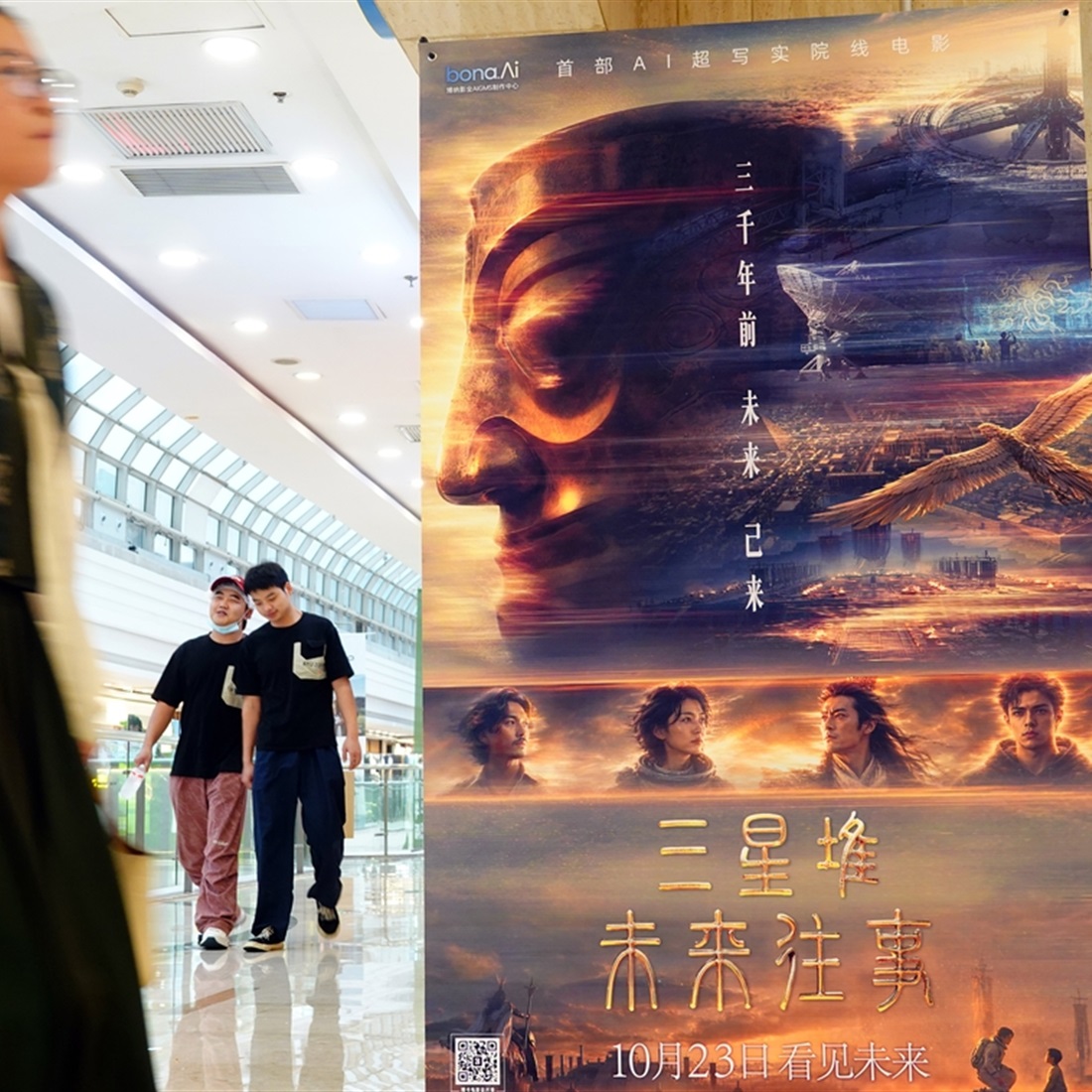
China's first fully AI-made feature approved for theatrical release earned just over 1.18 million yuan (US$180,000) in its first four days, highlighting the gap between enthusiasm for the technology and demand at the box office.
The science-fiction animation, whose title translates as "Sanxingdui: Future Past," had reached that total by 11am yesterday, according to Maoyan's professional box-office service. On its opening day, it accounted for 2.8 percent of screenings, with occupancy of 1.1 percent and roughly one viewer per screening.
The film combines ancient Shu civilization with a futuristic story in which humanity must collect six Sanxingdui artifacts to complete a mysterious warning from space. Its marketing targeted archaeology and traditional-culture enthusiasts as well as younger viewers interested in science fiction and AI.
The muted debut contrasts with investor enthusiasm. Bona Film Group shares hit their daily upper trading limit three times in six trading sessions after the release date was announced. AI-generated short dramas have also attracted platform support and creators seeking lower costs and faster production.
Bona Film Group shares yesterday opened sharply lower with a gap, quickly extended its decline, and sealed the limit-down. Today, however, the stock rebounded after a lower open and is currently slightly lower in morning trading.
Some Douban reviewers praised the film's visuals and music but criticized inconsistent character appearances, mismatched lip movements and disjointed storytelling. One likened it to stretching short-drama thinking into a feature film.
Wang Xing, who handles publicity for UME cinemas in Chongqing, told Shangyou News that viewers accustomed to watching AI animation for free could hesitate to buy cinema tickets. He said cinemas had modest expectations for the film and its performance was unsurprising during a quiet period.
Liu Haibo, a professor at Shanghai University's Shanghai Film Academy, said the combination of AI and the big screen excited film technology specialists more than ordinary viewers. He also pointed to the absence of stars and a title lacking strong commercial appeal.
Wang said AI was unlikely to replace actors soon because its characters lacked the distinctive expression audiences valued. Scripts and stories remained central to a film's appeal, he said.
Contrasting success of 'Niu Lai'
The contrasting success of "Niu Lai" suggests audiences can look past technical shortcomings when a film's story extends beyond the screen. Made for less than 100,000 yuan, the independently produced animation initially drew curiosity for its simple plot, crude modeling and conspicuously handmade visuals.
Attention then shifted to the mother and son who spent five years making it, and to a mother's unwavering support for her son's dream. Their story became a widely discussed topic worldwide, helping propel the film's box office to 64.288 million yuan.
The contrast suggests technical sophistication alone is no guarantee of audience appeal. Viewers may embrace an imperfect film when they connect with the people and emotions behind it. AI can generate images, but the affection surrounding "Niu Lai" points to something harder to manufacture: a sense of personal commitment, sincerity and love.
Bona's second AI film is already in production, with work continuing despite the first film's weak debut.
Editor: Wang Qingchu
In Case You Missed It...
 Oct 26, 2026