Chinese Stocks Stage End-of-Week Rebound but Investors Remain Wary
China's stock markets rebounded on Friday from morning losses, helped by buying from state-backed funds that stanched a further slide into bear territory. The reprieve, however, may be short-lived after Asian trading was followed by a later Wall Street selloff. Investor sentiment remains wary, with analysts saying risk is being repriced.
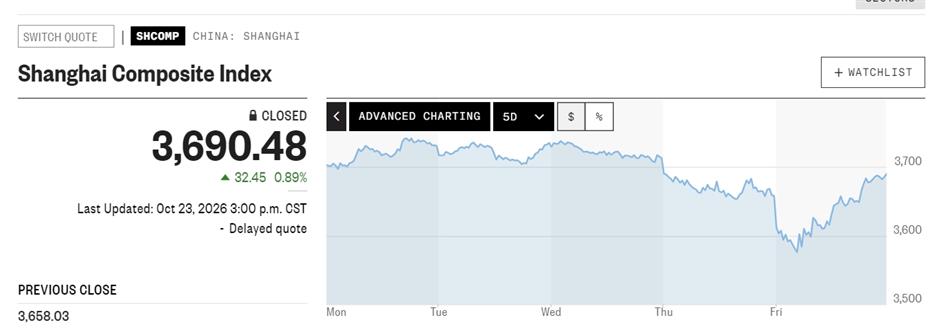
The benchmark Shanghai Composite Index ended Friday up 0.9 percent, and the Shenzhen Component Index jumped 2.8 percent. However, the gains couldn't save markets from weekly losses. Shanghai was down 0.7 percent and Shenzhen lost 1 percent.
The tech-focused ChiNext board in Shenzhen climbed 4.2 percent on Friday but fell 3.2 percent for the week. Shanghai's Nasdaq-style STAR Market rose 3.7 percent on Friday. The outcomes were similar in Hong Kong, where the benchmark Hang Seng Index edged up 0.7 percent on Friday but lost 4.5 percent for the week.
"The markets have seen apparent support from capital inflows, especially in the CSI 300 index exchange-traded fund," said Liu Chenmin, an analyst GF Securities. "Big-cap shares like CATL were among the first to get a huge boost on Friday afternoon despite earlier losses."
Friday's afternoon rebound on Chinese mainland markets was led by stocks related to electric motors, humanoid robots, semiconductors, batteries and consumer electronics. Unitree Robotics, Huayang Intelligent, Zhaowei Machinery & Electronics and Moons' Electric all hit the upper daily limit on share price gains.
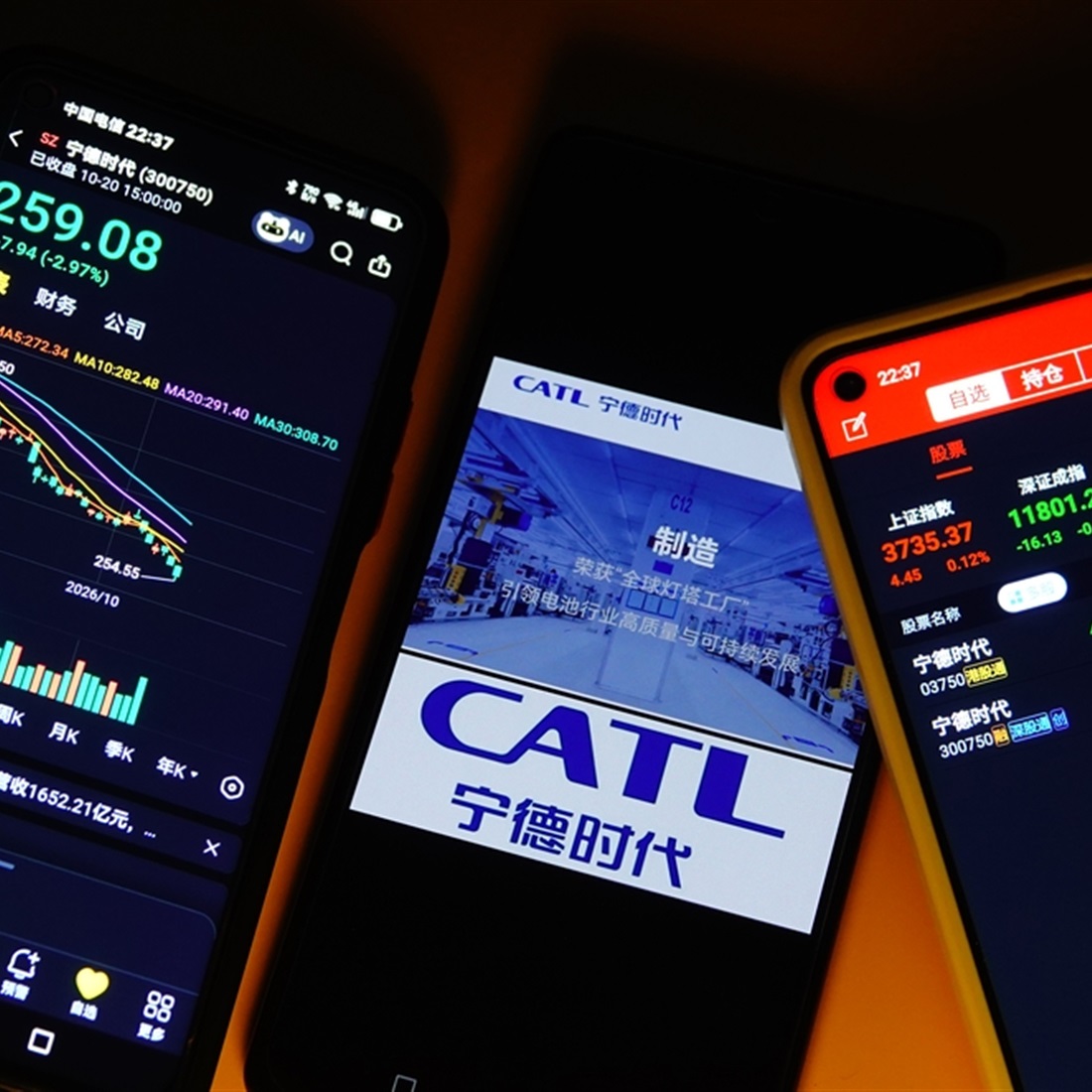
Shares in Contemporary Amperex Technology (CATL), the world's largest electric vehicle battery maker, drew 25.4 billion yuan (US$3.8 billion) in transactions on Friday, ending the day 7.8 percent higher in Shenzhen. The company this week reported its third-quarter profit rose 14.5 percent from a year earlier to 21.2 billion yuan, though growth slowed from the second quarter. Despite Friday's rise, CATL's shares tumbled 14 percent this week.
China's biggest banks, however, retreated on Friday. Bank of China fell more than 4 percent, and Industrial and Commercial Bank of China and China Construction Bank each lost more than 3 percent.
In Hong Kong on Friday, Chinese chipmaker Minimax surged 16.7 percent after dropping below its March IPO price for the first time a day earlier. Among tech heavyweights, Alibaba gained 0.5 percent and Tencent was up 0.94 percent, but personal computer maker Lenovo fell 2.35 percent, the worst-performing blue chip. Aluminum Corporation of China rose nearly 7 percent to lead blue chips, with Zijin Mining up 1.2 percent.
On Thursday, China's benchmark CSI 300 index, which tracks stocks on the Shanghai and Shenzhen stock exchanges, slipped into bear-market territory by falling 1.8 percent on the day and 20 percent from its June peak. Analysts blamed slowing or lower company profits for part of the slide, combined with a global rout in tech shares this month and rising oil prices.
But investor confidence remains fragile.
"The jump on Friday can't guarantee anything when markets reopen on Monday," said a retail investor surnamed Fan in Shanghai, who said he held back an impulse to buy shares back on Friday after dumping some a day earlier.
Amid positive factors, data showed 94 companies on the Shanghai Stock Exchange's main board and the STAR Market posted a combined 7.6 percent year-on-year growth in nine-month profit, with revenue increasing 8.2 percent. As of Thursday, about 90 percent of the reporting companies showed profitability. The nonferrous metals sector doubled profit, transportation rose 74 percent and electronics companies posted a 38 percent increase in revenue.
Across Asia, Japan's Nikkei lost 2 percent for the week as higher inflation portended a possible further rise in Bank of Japan interest rates, and South Korea's chip-heavy Kospi dropped 4 percent amid the global selloff in AI-related tech shares.
On Wall Street Friday, major markets fell, adding to weekly declines, The Dow Jones slumped 1.2 percent, the broad S&P 500 index was down 0.5 percent and the Nasdaq lost 0.2 percent. Investors remain concerned about mounting debt financing by major tech companies as borrowing costs rise, and also about surging global oil prices, with benchmark Brent crude futures hitting a six-month high of US$117 a barrel on Friday. For the week, the S&P 500 lost 0.5 percent and the Nasdaq shed 0.7 percent.
Editor: Yao Minji
In Case You Missed It...

 Oct 22, 2026